Showing posts with label Bespoke. Show all posts

Wednesday, May 19, 2010

Finding Tim Little

Tim Little located at 560 King's Road.

On 19th April 1997 the doors of the Kings Road headquarters of Tim Little were opened and the store began selling Tim's first range of shoes. Now, a good few years on, a lot has happened and many people, famous, infamous and otherwise have come by, bought shoes and spent time discussing the ways of the world with store manager Howard. Last Friday was the first time that I had ventured to this wonderful store. Shame on me. I took the dizzy inducing tube ride to Fulham Broadway on the pretense of learning more about Grenson's AW10 collection but my eyes were opened to Tim Little's own line. For those of you who don't know, in addition to designing his own eponymous label, Tim Little is Creative Director at Grenson and has been since 2004. After an enjoyable natter about one of England's master shoemakers over a cup of tea I declared that I had to return to the Tim Little store armed with my camera. This morning I did just that and I'm excited to share what I found...

One of the walls inside the store.

Having sold their shoes in many of the world's famous stores, from Japan to America and back, they like to keep it extremely selective and special. They believe that they are the best people to sell their shoes and having stepped inside and spoken with the team it is easy to why. The oft quoted Max Amsterdam sentence, "Business is the art of extracting money from another man's pocket without resorting to violence" is displayed on the shop window. I'm quite Sure Tim Little and his team have little difficulty in extracting money from other chaps pockets in a non violent manner. They are masters of business through championing the art of offering extremely well made products in a friendly and knowledgeable environment. I certainly found it difficult to walk away empty handed.

Models from both Black Sole and Blue Sole alike attracted my longing gaze.

The store is split in to three collections; Blue Sole, Black Sole and Italian but each model is named after a well known Blues song. 'Blue Sole' is the original line and got the label to the position they are today. Beautifully made, the leathers are French calf, full grain leathers from some of the the best tanneries in the world. They are, of course, Goodyear Welted, which means they will last a long, long time and are easy to repair when necessary. The 'Black Sole' range is left to rest on the last for at least thirty days to allow the leather to adopt the perfect shape of the last and hold that shape over many years to come. Last but not least is the 'Italian Collection' which includes sneakers with a difference, boat shoes, driving shoes and wonderfully washed boots. Below are a few highlights from each...

One of my favourite shoe line ups in the store. The Red Rooster (centre left) is beautifully simple. This is an old favourite of Tim's, the whole cut on a round toe. The simplest things are often the hardest things to do.

I particularly love the bumblebee brogue and I believe this to be the boot model. Made from burnished calf, with a double sole with rubber bottom, this shoe should be in your wardrobe for many years and brought out whenever you feel like taking on the world.

Worry Worry. Sneakers are classics now too. This is Tim Little's, made in Italy of the softest calf, it is simple and iconic.

A few variations of This Is Hip. These are trainers for people who enjoy quality shoes. The leather is burnished calf that is washed in drums to give a real lived in look. As with all of our Italian shoes, they are hand made in Tuscany just outside Florence.

A few highlights from the Italian collection. On the surface the boat shoes looks pretty classic, but up close you realise that each one is hand made in Italy using the finest materials.

Upper options sitting atop a speaker.

In addition to offering well made ready to wear shoes, Tim Little offers a full bespoke service. After an initial consultation and a few measurements taken, shoe styles are discussed and a personal last made before the bespoke shoes are crafted to the client's individual specifications. The whole process takes twelve weeks for the first pair and eight weeks for subsequent pairs.

I've forgotten the name of this boot but I fell in love with it.

I find it difficult to resist the perfect aroma of well made shoes and to be in a room stocked full of them was torturous. I had to summon a great deal of inner strength to walk away from the store without giving in to my wanton consumerist desires. Something tells me that I'll be venturing down to the King's Road sooner rather than later and my resolve might just weaken. In the meantime, I just had to let you know about this store. I feel a complete fool for not knowing about it sooner.

Tim Little makes the trip south well worth it.

Tuesday, January 26, 2010

Imagining Oscar

Hormazd Narielwalla's latest creation, Oscar.

I first came across Hormazd Narielwalla's work at EXIT Gallery's "A Fairytale About Fashion" exhibition. Narielwalla's Dead Man’s Patterns was a design story, beneath the trappings of menswear into the book, the man, the pattern, and his images really captured my imagination. and I just had to post about it. I have kept in close contact with Hormazd since falling for his artwork and he has just sent me through his latest work, Oscar. Fresh from exhibiting his last body of work at Paul Smith's Furnishing Gallery, Hormazd has imagined Oscar, an old English eccentric brought to life by old bespoke Savile Row suit patterns belonging to men who are sadly no longer with us....

Hormazd Narielwalla's work originates from sets of bespoke patterns belonging to now deceased former customers and from a by-gone era. Everyone sees the finished suit, yet few are privy to that private dialogue which assesses, measures, and catalogues the subtle details which make up one single man and his suit. These patterns have recorded a history of intimate dialogues of customer measurements and fittings over a lifetime but no longer have any practical use to the cutter and are often discarded. The talented artist takes these fragile pieces of parchment out of their original context and breathes fresh life in to the creases and careful folds, along finely traced pencil marks and measurements, giving them a new lease of life as art objects.

Hormazd's creations channels the quirky sense of English tailoring style which is a fundamental facet of Savile Row. They remind me of the E. Tautz film presentation last season. E. Tautz is a label which offers simple tailoring with a little something extra, a bit of pomp, colour, a sense of humour and that Quentin Jones film captures it all. Here Hormazd has gone a little deeper and has exposed that wry smile, sharp wit and sense of eccentricity prevalent within so much of English tailoring.

Friday, January 8, 2010

The London Cut

An informative look at Savile Row Bespoke Tailoring. James Sherwood's The London Cut.

From this blogs very inception I have professed my admiration for bespoke tailoring and my musings often lead me to one street, Savile Row. It is a unique street, located in the heart of Mayfair just yards from the luxury retail of Bond Street and hidden from the consuming madness of Oxford Street. I currently have a seemingly unquenchable thirst to add to my knowledge of the intriguing art of tailoring and thanks to one of my Christmas stocking fillers from Susie, I can become fully rehearsed in the happenings on Savile Row after reading The London Cut. Inside these two hundred and fifty pages James Sherwood reflects on the dissolute and distinguished customers who have walked through Savile Row bespoke tailors' doors over the past two centuries whilst considering the past, present and future for Savile Row.

Cary Grant wearing a Prince of Wales checked jacket - tailor Kilgour, French and Stansbury. Charles Dickens - tailor Henry Poole & Co.

Is there another street where the history and mystery of men's style meet as grand as London's Savile Row? James Sherwood who penned this fully illustrated book asks this very question and the answer is a resounding no. If any of you doubt this point I implore to read this book and allow the knowledgeable Sherwood guide you through this famous street, its skilled inhabitants and a look at its clientele. The book is the first portrait of modern Savile Row written in English and contains detailed information on London's premier tailors whilst including marvellous images of Savile Row past and present. The master tailors of Savile Row have dressed the famous and infamous from all over the world, quietly and assuredly satisfying demand for the Row's touch of elegance and English eccentricity.

Madonna wearing a tweed three piece - tailor Henry Rose. Winston Churchill in that iconographic propaganda pose - tailor Henry Poole & Co.

The street has been the spiritual home of bespoke tailoring for two centuries measuring up practically everyone who is anyone in world history, politicians, film stars, heads of state or fashion icons. One of my favourite facets of the book are its images which document the notorious and celebrated men who were regular customers of the Row. Admiral Lord Nelson, the Duke of Wellington, Rudolf Valentino, Pablo Picasso, Marlene Dietrich, Winston Churchill, Fred Astaire, Frank Sinatra, Sir Laurence Olivier, Alfred Hitchock, Cary Grant, John Lennon, Mick Jagger, Madonna, Jude Law and Daniel Craig to name just very few.

Gary Cooper - tailor Anderson & Sheppard. Fred Astaire in Top Hat - tailor Kilgour. Tom Ford - tailor Anderson & Sheppard.

As much as I enjoy looking back at these images, it has to be pointed out that Savile Row is certainly more than a piece of history, more than just a name. It is a community and a world respected standard, the gold standard of handcrafted tailoring. Long may it thrive and be celebrated.

Monday, November 30, 2009

My made to measure (part one)

Ready for made for measure.

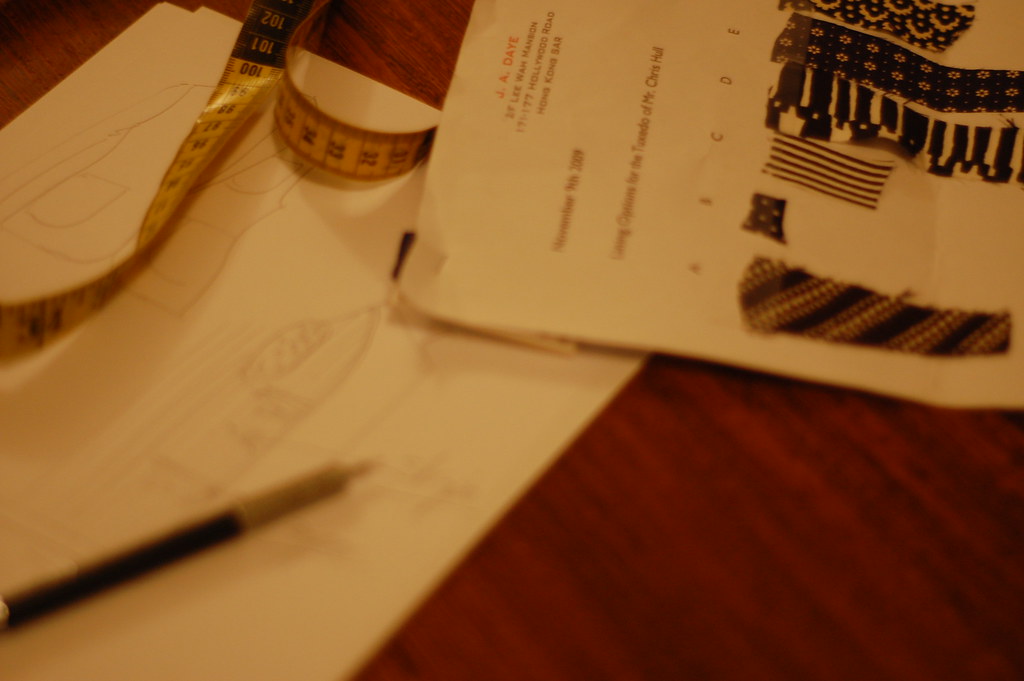
Long time readers will know how often I have dreamed of entering the world of bespoke and made to measure suiting. The thought of having a suit made to my own personal specification and desire has appealed to me for many years...now, thanks to my recent trip to Hong Kong the wait is finally over and the dream is realised. Despite being told of the numerous wonders of Hong Kong, I have always been drawn to the idea of exploring the countless little tailor shops scattered throughout the city. However, as my last minute post asking for your help demonstrated, I was more than a little bewildered by the abundance of willing and able craftsman at my potential disposal and I needed to make a choice between them. Thanks again for all of your recommendations, when I return to Hong Kong next year I will be sure to explore them fully (first on my list is the oft recommended W. W Chan) but I just ran out of time this trip. As it turned out I managed to stumble across the perfect tailoring shop to guide me through my first made to measure suit via an eye catching guide book, j.a. daye. I was intimidated by the choice of having to pick out my tailor but my find bridged the gap between what I am used to and what I needed. j.a. daye is my idea of what a good twenty first century tailor should be, a bespoke experience for a generation raised on the ease of ready-to-wear shopping, with classic styles made with a distinguishable modern point of view in unexpected fabrics. From the moment I stepped in to the store and met the owners I knew that this was the place for me. Having found my tailors, let me take you through my journey in to made to measure. Here I choose the suit, get measured up and work out the initial design features with my tailor but tune in later this week for the next stages...

Finding the suit that inspired it all...

The studio and store are both in the heart of old Hong Kong and all suits are made by a small network of expert tailors. After stepping inside their store it was not long before I had established the perfect suit to kick start my first foray in to made to measure tailoring. The suit jumped right out of the clothes rail and I knew that it would make my ideal lightweight Sunday best. Following a quick chat with proprietors Ellis and Alex, I discovered that the suit is made from a crosshatch-like weave which appears both traditionally Japanese and very modern at the same time. From a distance, it might be denim, but it is so fine and delicate to the touch that no doubt I will actually lament taking it off at the end of the day. Following this inspired choice I excitedly trotted off to the tailoring studio to get measured up.

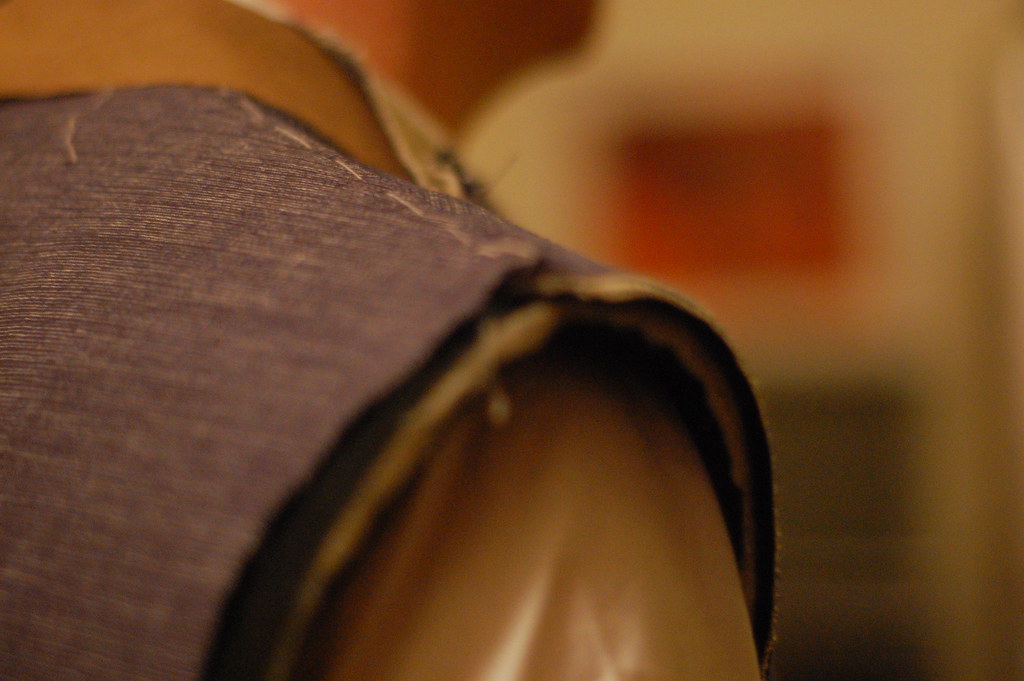
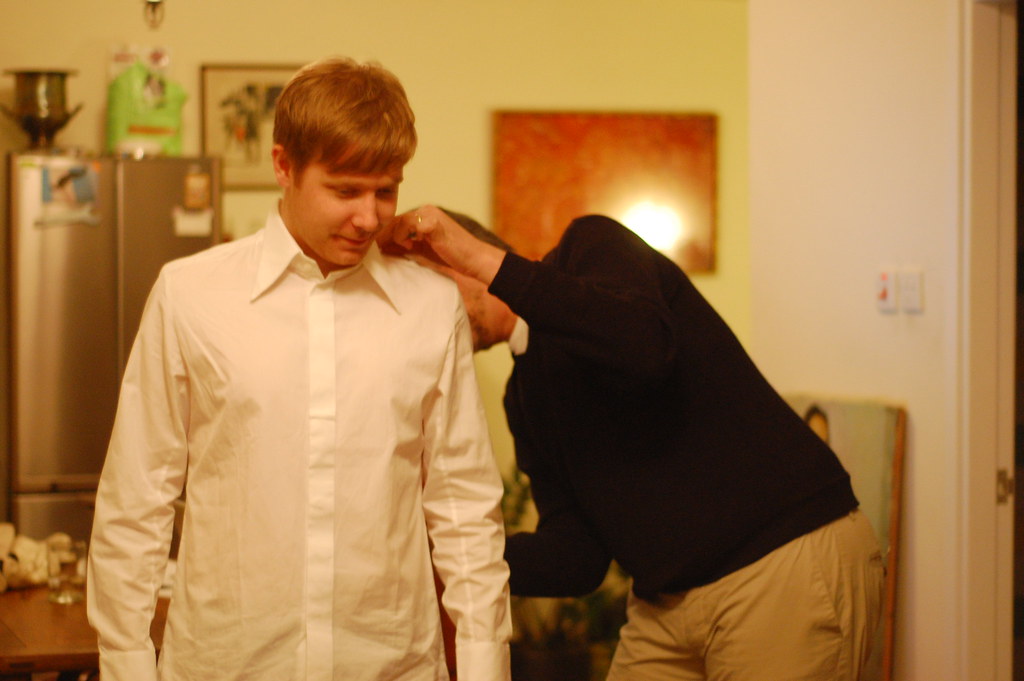
The first measurements. Here I am being measured by the lovely Ellis. Fittingly, I am wearing my handmade in england shirt (closing down sale purchase from Jas M.B) for the very first time.

One of the reasons for choosing either a bespoke or made to measure suit is that the end result is certain to make the wearer look so much better than anyone else in the room. Not only will you look slimmer, taller and more pulled together, but you will move much more freely and feel totally at ease. You should feel as relaxed in it as you would in your favourite pair of jeans. To reach this level of ease, the first stage requires the tape measure. I have to confess to being a little nervous as the first batch of measurements were recorded.

Compiling statistics.

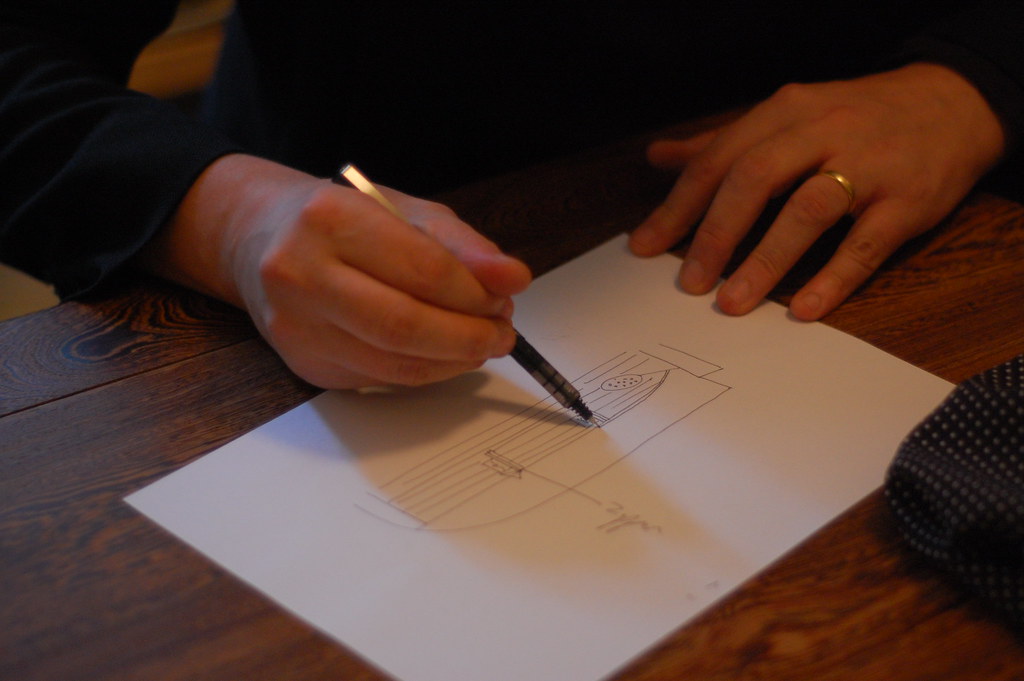
This was the first time that I had been measured up and I really didn't know what to expect. Thankfully, old hand Ellis soon made me feel at ease and I found the whole experience enjoyable whilst learning a thing or two. If you are a little unsure of the process, the pair have created a series of fourteen videos documenting how you can take the required points of measurement yourself. After the measurements were recorded the real fun began as Ellis and I began to sketch out our shared vision of what the suit could and ultimately would be...

Ellis sketches out our shared vision.

Prior to my Hong Kong visit I had given my ideal suit a great deal of thought and I had a pretty good idea of what I wanted. That said there were a few points I needed the tailor's guidance on and Ellis was extremely talented at probing for my input and turning my responses in to something tangible. With pen in hand, his sketches soon took shape and I knew that he would create my perfect Sunday best.

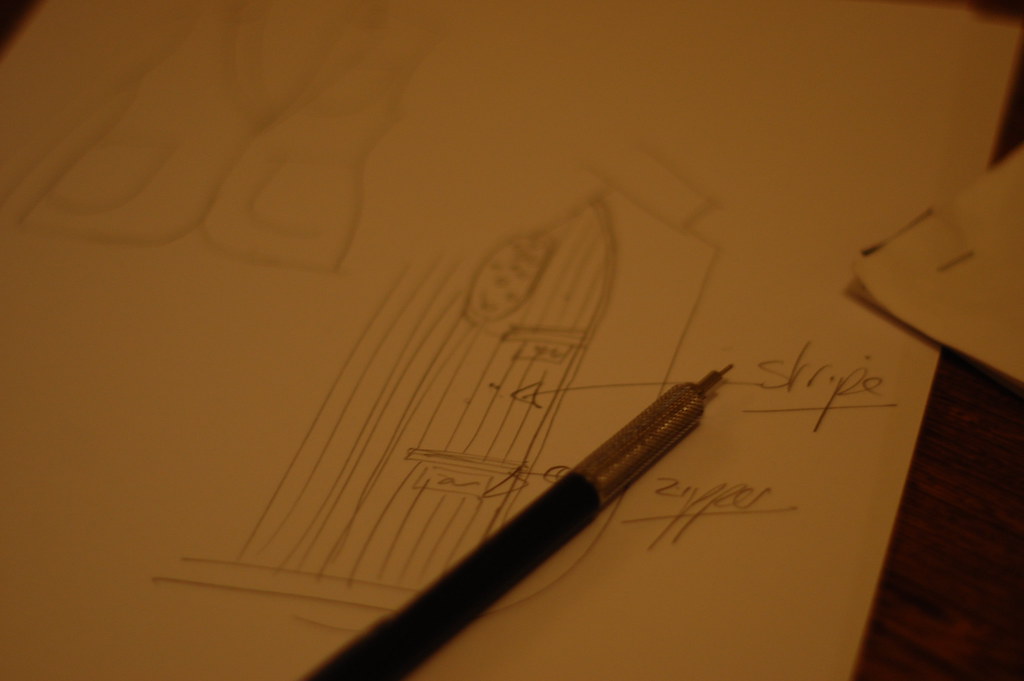
Working out the finer details

There was so much to consider but as I chatted with Ellis my imagined suit took shape. As I had fallen head over heels for the cross hatch voile two piece in store I didn't want to change too much. In short, I wanted to keep the one button closure at waist, the three patchwork pockets at front and the three inside pockets. For me, this is relaxed tailoring at its finest. However, I had to inject my own personality in to the finish of the jacket in particular. After discussing the options, I decided that the sleeves would be lined in a polka dot silk and the body would be complimented with a striped silk. Having made this decision I could not have been more excited about donning this suit for the very first time. This of course had to wait. At least one fitting (more likely two) was required before the suit could be fully realised and created. to my specifications. We left the first meeting there and I left the studio eager to return for the next stage...

The imagine suit..soon to be realised...

Wednesday, September 30, 2009

Pattern Cutting as Art: A study on Anansi


To coincide with the Frieze art fair Paul Smith will be exhibiting the latest body of work from Hormazd Narielwalla entitled ‘A Study on Anansi’ from 10th to 21st October at his Furnishing Gallery. The exhibition will consist of a set of ten artworks drawing inspiration from two sources, Savile Row tailoring patterns and traditional African Anansi tales to create a new body of work.

A Study on Anansi is a celebration of the popular character from West African and Caribbean folklore brought to life using the discarded patterns. "Anansi", the trickster, is the wise and clever Earth God but I have to confess to turning to my trusty friend google, for answers. Despite my ignorance, many aspects of these stories have trickled through to Western society and into children’s stories, super-hero characters and fictional literature. In some versions of the stories Anansi created the sun, moon and all the stars. This attribute of the stories makes it through into Narielwalla’s work where Anansi dances, teases and entertains himself with his most prized creation, the sun.

I first came across Hormazd Narielwalla's work at EXIT Gallery's "A Fairytale About Fashion" exhibition. Narielwalla's Dead Man’s Patterns was a design story, beneath the trappings of menswear into the book, the man, the pattern, and his images really captured my imagination. and I just had to post about it. The artists work originates from sets of bespoke patterns, which of course belonged to former customers, now deceased, from a by-gone era. These patterns have recorded a history of intimate dialogues of customer measurements and fittings over a lifetime but no longer have any practical use to the cutter and are often discarded. The talented Hormazd takes these fragile pieces of parchment out of their original context and breathes fresh life in to the creases and careful folds, along finely traced pencil marks and measurements. Opportunities are created by giving these pieces of discarded paper a chance to breathe, simply in the act of extracting, giving them a new lease of life as art objects.

For this work, Narielwalla's uses scans, photography, his own sketches and digital composition to create a set of playful artworks that have a traditional look and appeal. Creating bespoke clothes for the rich and powerful has made Savile Row iconic but in this evocative work Narielwalla is showing us tailoring patterns, as they have never been seen. The patterns are reinterpreted and resurrected; the lives of people measured through tailoring are brought back to life as works of art through even older tales from another world.


For the past year and a half Hormazd has had the opportunity to work closely with Dege & Skinner's cutters and tailors. It is in this private tailoring environment that he truly began to consider tailoring as Art. Hormazd has recently been awarded an international scholarship to read a Doctorate in Philosophy at London College of Fashion and his main focus will be on pattern cutting as Art. The artist is currently working on the memoirs of Master Tailor and Chairman of the firm, Michael Skinner. Skinner's story will be narrated through his own pattern cutting journals whilst studying at the prestigious Tailor & Cutter Academy. I can't wait to find out more information on this project and as soon as I do, I'll share it with you. In the meantime, enjoy the selection of artwork above.

Wednesday, September 2, 2009

Style Salvage Speaks to... Lodger (Part One)


We have previously hinted that we were thinking about launching a series of posts celebrating great British craftsmanship and the more we both thought about it, the more we wanted to do it. There are a number of inspiring brands showcasing great British craftsmanship but we'd like to kickstart the feature with an interview with Nathan Brown of Lodger Footwear.

Nathan Brown and his team at Lodger have an irrational passion for beautiful shoes and we think this should be applauded. The mix of continuous design, in combination with cutting edge technology and traditional craftsmanship makes Lodger a truly unique shoe company. After we posted about the July shoe of the month Nathan dropped us an email to thank us and invited us to the store for a chat over a glass of wine or two. We might just have had a little too much fun which is why we have had to split the interview in to two parts. In part one we discus his love affair with shoes, the catalysts for launching Lodger and his favourite shoes thus far. Come back tomorrow for the concluding part where we will talk about the balance between technology and traditional craftsmanship and Nathan will share his recommendations.


Style Salvage: You are undeniably a shoeist. Was there a particular pair you saw/owned which kicked off your love affair? How did this passion develop over the years?
Nathan Brown: It is quite simple really: two things. One: my father was an accountant so he certainly wasn't a fashion guru but he was old school. He bought quality shoes which he polished every week, as a man is judged by the state of his shoes. So I was taken out to the garage when I was about twelve and taught how to shine my shoes. But then I grew up in Beaverton, Oregan, which is the world headquarters for Nike and US headquarters for Adidas and I've worked for both of these brands. Growing in Beaverton it was a ten minute jog to either of these headquarters, we were right in the middle. I got in to shoes from clothing really. I used to make my own clothes because I couldn't fit in anything, so I'd make my own patterns.

SS: Did you have any formal training?
Nathan Brown: My Mom taught me. Not fashion but mainly for snowboarding. I'm 6ft9, 145 pounds. Back in the day, they just didn't make anything so I had to make my own clothes. So I got in to apparel initially, got in to shoe companies and then it grew.


SS: Did the size of your feet come in to play?
Nathan Brown: Sort of. It is really hard to get hold of good looking shoes in a size thirteen/thirteen and a half UK, size fifteen US. I am a product guy so I'm sure that it had something to do it and I love making things. It would have been a lot cheaper to buy a bunch of bespoke shoes than to start Lodger!

SS: Tell us about your background and how Lodger evolved...
Nathan Brown: I was running Adidas global tennis apparel business in Germany and my drinking buddies were the guys who launched Adidas Originals which went from nothing to about three billion Euros. It was launched by five guys and they've now become the Head of Advanced Design at Nike, Head of Lifestlye for Reebook in Tokyo, Head of Development for Reebok in Boston and one of them is turning around Le Coq Sportif. So, we would just sit around and get drunk on cheap red wine and talk about doing our own thing, "let's come at shoes from taking the design, innovation and technology from sneakers and apply it to classic shoe making and give that a kick up the ass, wouldn't that be fun?!". So we started talking about that in 2000 and I just kept building on it and going back to it, then I just decide to it as a hobby with one of my mates who happened to be working in London at London but he got a great job when Nike bought Reebok so off he went to Boston. So I decided that I was working in a job which I didn't care for much and so I thought "fuck it, I am going to take a punt and try and get some backers, if it didn't work at least I tried". Fortunately I got some great backers and I get to do this!


SS: The store is sandwiched between Bond Street and Savile Row on London's Clifford Street. Having grown in Beaverton, Oregan, what brought you to this great location in the style heart of London?
Nathan Brown: It took about a year to get this shop specifically. It used to be an art gallery run by a crazy Irish artist. The deal fell through three times but I was a like a dog with a bone, I really wanted this shop but it took over nine months of negotiation. I loved the space here but meanwhile I was looking at every other street in the area, I could be an estate agent. I looked at Mount Street which is a great street but it is mainly for women, not nearly enough passing trade. I just loved this neighbourhood but I love this shop, it is only six hundred square feet with a the two floors.

SS: The size of the store combined with the split levels, fits well with the two Lodger offerings...
Nathan Brown: We tried really hard to find a store with two levels or at least two clearly defined rooms where we could segment the ready to wear and then have an area where we could have a drink and relax because this experience is so important to our other offering.


SS: How do you balance the two experiences?
Nathan Brown: It is quite organic really. Usually the guys sitting down on the couch with wine or an espresso are the customers who keep coming back. That being said there is a certain kind of new customer who is up for sitting down and talking. So if people are up for it we could be sitting down here for a couple of hours with a new customer but it tends to happen over time when customers get a little more comfortable... but we want it to be a relationship with all our customers.

SS: You've been open now for nine months, how are the relationships building?
Nathan Brown: It has been great. My thoughts were on building relationships with guys and bringing them back. I did a quick analysis when we were six months old and 30% of our customers had already come back for a second pair of shoes or more. At that point we had one customer who had bought seven pairs of shoes! Now we have one customer who has got about a dozen pairs in nine months. Having such a high repeat hit rate is, I think a testament that people are liking what we do. It feels great that people are beginning to collect our shoes.


SS: Did your sneaker background inspire the shoe of the month, the desire to consistently release new models while the rest of the shoe industry moves with the seasons?
Nathan Brown: The whole shoe of the month thing was a calculated thing. Number one, I think seasons are artificial for shoes, black suede is not a six month thing but brogues should be around for ten years. So the shoe of the month addresses this, shoes are released for exactly the right month. Secondly, the biggest assets Nike and Adidas have are their back catalogues, the old school models they can release. It was a calculated idea that we wanted to generate a catalogue that we can mine in an intelligent way quickly. It is exhausting to do but it allows us to test new ideas before we put them out on our ready to wear collections and gives us a lot more information, we get immediate feedback. In nine months we have done around a dozen models which would take around six years if we did it the standard seasonal way.

SS: Out of the twelve have you got any personal favourites? I know it must be like choosing your favourite child...
Nathan Brown: You want me to pick favourites from my babies? Well, there a couple of pairs I just couldn't get; I can't justify having every model but kind of wish I could. I loved the Spectator but couldn't get a pair. They are beautiful shoes. I have a pair of the Oxford George boot but I just can't bring myself to christen them yet. Those are a couple of my favourites and I have to say that the white tennis shoes are spectacular, I've worn them so many times and they are still white and something else. None of those were our best sellers but they are my favourites, although the tennis shoe was our second biggest seller.


SS: Are there any which you just can't wait to release?
Nathan Brown: The thing with the shoe of the month is we can be very quick so we've not really thought beyond September but I'm excited by the Kudu work boot, made from the twenty five year old Kudu which is going to be spectacular, lined with purple Velvet- stunning.

SS: And of course you are working on the boat shoe...
Nathan Brown: Yeah. It will hopefully be released for February next year so we can drop it in early Spring and it is going to be gorgeous. We went back to the drawing board because I think it's good but we can completely blow it up, we can make is something else, so it is going to be a fun one to release. I can talk about all of them, it is so hard to narrow them down. Annejkh is the best show designer out there, she understands sneakers but she is obsessed with men's classic shoes so she understands the aesthetic. She is a sneaker head- I think a lot of us have not grown out of that and it affects how we address shoes, how we wear them and how we style them.

Tuesday, May 26, 2009

Inside the Duke of Windsor's wardrobe

”I was in fact produced as a leader of fashion, with the clothiers as my showmen and the world as my audience.” The Duke of Windsor.

Following on quite nicely from my earlier post on Prince Charles are these wonderful images which offer a sneak peek inside the wardrobe of the most obvious regal style icon, the Duke of Windsor. Regular readers will know that I am somewhat obsessed with wardrobes ever since I undertook the mammoth task or organsing my sorry excuse for that particular piece of furniture. I recently stumbled across a great piece on the Duke Of Windsor written by JP over on Black Watch which uses images and quotes from a number of sources covering the Sotheby's auction of his wardrobe in 1998.

”Not since his forebear King George IV in the 1820’s had a monarch lavished so much care and expense on his own personal appearance,” Ms. Taylor, the Sotheby’s specialist who spent seven years preparing for this sale. ” He bought clothes of the finest quality and expected them to last a lifetime, which in fairness, many of them did.” The Duke used the same tailor, Scholte of Savile Row in London, to make his jackets from 1919 to 1959.

The Duke’s wardrobe spans 60 years, because he never lost his trim figure (his waist went from 29 inches to 31 inches over a half century) and he certainly championed the art of wardrobe building. A 1960 inventory of the Duke of Windsor’s closet recorded fifteen evening suits, fifty five lounge suits and three formal suits (with two pairs of trousers for each), along with more than one hundred pairs of shoes including a superb collection of velvet slippers by Peal & Co.

Diana Vreeland, the former editor of Vogue, had strong views about the Duke. ''Did he have style?'' Vreeland once asked rhetorically. ''The Duke of Windsor had style in every buckle on his kilt, every check of his country suits.''

Monday, March 23, 2009

E Tautz over another cup of tea

As you all know I met up with Patrick Grant last week and were talked through the E. Tautz collection. My time with the youngest guvnor on Savile Row did not stop there and I was fortunate enough to ask him a few more questions and it was an absolute pleasure to hear his thoughts on men's fashion. The last post was full of great quotes but my particular favourite was "we've got to the point where we'd rather have ten cheap things than one good thing" and the below picks up on this point. Here we talk about the effect of the recession on buying, the art of wardrobe building and the need for more tailors...


SS: What has the interest from buyers been like given the current economic climate?
PG: Japanese buyers have recently confirmed but there were only five buyers actually invited to the show itself. Budget cuts are an issue but the people who came really liked the collection and went away on the hunt for extra buying funds. We are still waiting on hearing back from a few but we will know in the next week or two, so we will see what happens.
SS: I am always jealous of the offerings available to Japanese consumers, they just have it too good!

SS: The art of wardrobe building is one we love but it certainly goes against the prevailing throwaway consumerism of today; what are your thoughts on this way of consuming?
PG: If you buy well you will still have it when it is sixty years old. I've got plenty of bits of clothing in my wardrobe, particularly knitwear and the odd jacket that I had bought from the likes of Gucci, Prada, Helmut Lang, Dolce & Gabbana to a certain extent and a few others and I've still got the best of those pieces and I still wear them. The only thing that doesn't really last are the trousers. If they had been made in the cloths that we use and in the way we make them they would still be fine. Machine hemmed trousers are always falling apart and it is amazing that no one knows how to sew anything anymore.

SS: That is so true, I've only recently started dabbling with replacing buttons on jackets but the effect and response to it has been so positive and it is so simple.
PG: We should put up a number of how to videos on the website instructing people how to get the most out of their clothes through simple tailoring, how to hem your trousers, how to sew a button on your shirt... We used to do it all the time at school, not particularly well but we did it. We used to shorten our trousers: I remember one of my roommate taking in peoples trousers in because we all wanted trousers that, basically you couldn't put your feet through. Few people are bothered to do that now. Now if a button falls off a shirt it is thrown away.

SS: Can you see this attitude changing in the foreseeable future?
PG: There is group called Slow Fashion at St Martins which I went to the first meeting of and it is so brave of them, I think, because it flies in the face of everyone who basically pays for their existence. The more care that is taken in the creation of your clothes, the more enjoyment you will get out of them and the longer you will get to enjoy that. I think, especially for men, there are fashionable men and stylish men and we are talking more to stylish men than fashion men but of course there is a little overlap. I think even fashionable men have a little space in their wardrobes for certain core pieces. Everyone wears black or grey slim trousers and if you have a really great pair that fit you beautifully, look good, kept their crease really nicely and were going to last twenty years, you might think that £800 isn't really that much... it might feel like a lot but think of the wear you will get out of them.

SS: It seems most people have forgotten about the whole cost per calculation.
PG: I mean I used to pay £1200 for an off the peg suit, this is going back a few years so I have no idea how much they are now but I used to wear them fifteen or twenty times and the trousers would be worn out in the crotch, I even had one and the tip of the lapel wore out.
SS: Ha, what were doing in that jacket?
PG: I have no idea but it was strange. I particularly have a problem with the crotch of trousers because I cycle and have big thighs. Of course we have lightweight cloths here that might not last but we would recommend a customer buy two pairs of trousers with their suit.

SS: You just would not get that service in most ready to wear stores.

PG: What's nice about the way we are coming at it is that the people involved in Tautz basically work at Nortons. We spend our lives dealing with the type of people we are hoping to sell Tautz to because they are the equivalent to our customers here who are unable to come here and have their suits made but we want to give them something of that quality. We cut it in a way we think feels like a good Savile Row suit, it has got shape in it and makes you look different, it's not a skinny, slim suit but a well cut suit and you very rarely see that. There aren't very many well cut suits kicking around this town and we want to give Tautz something of Savile Row about it. We eat, sleep and breathe great quality clothes and everything we do is done with integrity.

SS: Have you noticed a change in peoples attitude towards tailoring over time?

PG: Tailoring is an incredibly efficient way of buying clothes cost wise and you really get what you pay for. At Nortons the first suit we make, we don't actually make any money because we have to sew it, fit it, take it apart, re cut it, sew it, fit it, take it apart... you know, it is only when we've made one and have a pattern for you that we actually start to make some money. You are getting tremendous value for money if you go to a tailor and it just so happens that we are in the middle of a community of the best tailors in the world. Certainly what you get here is expensive tailoring but there tailors... actually, sadly there are almost no tailors left.

The country should be filled with tailors and everyone should be buying their suits from a tailor. I used to go to a little tailor in Liverpool and his suits were less than the Prada suits that I was taking in to be altered. My perception then was that Prada was very cool but the fact is he could have cut me and made a better suit for less money and I would have looked better if I wasn't such an idiot swayed by a label which I was at that time. 'The only name in your suit should be your own' is the old adage and that is a nice way of thinking about it. Most of my early suits came from a tailor in Edinburgh which doesn't exist anymore... in fact there is only one tailor in Edinburgh now. A city of half a million people, a capital city with a financial centre and only one tailor.

SS: I remember being tempted by a one page ad featured in GQ which called for more tailors.
PG: If you are good at it you can make a good living. The guys who work on this street certainly do but they are bloody good. It is a difficult street and you have to be really good to make a living here but if you are good, you can do very well. Most sewing tailors are self employed and we share with a number of firms. There are some great young tailors who work very hard, there are some old ones to who start at 6am and work right through to 9pm.

SS: It is such a shame that there are so few...
PG: The problem we have is the cost of training people. After years of lobbying by the Savile Row Bespoke Association they have given us £1,000 per apprentice per year but it costs us more like £20,000 so we can only afford one apprentice here at the moment but ideally we could train three people at a time. The biggest file I have in my drawer is full of applications for apprenticeships and we get about one a day. The thing is, we are flat out here and we desperately need more good tailors.

SS: Lastly, there has been a great deal spoken on luxury in the downturn and this must be on your mind as well...
PG: Many people have asked why we would start a new brand in the midst of this economic disaster and for me it doesn't really matter as to when we start but it feels as though people are interested in proper products, quality and integrity... everything we stand for. Whether or not the economic cycle is poor or good should not affect the decision to do this but there is also this belief that these are the type of thing people retreat to when you haven't got a surplus of cash to spend it should be spent on the items you know are worth it and will last. People will continue to want to dress well and wear nice things, which isn't always the same thing. We have seen this with Nortons which has a heavy British based client base and we actually had our best year in eight years last year, we saw a big jump on the year before despite a disastrous US economy and dour forecasts for the British economy. The start of this year has been really strong with this February being better than the last.

Thursday, March 19, 2009

E. Tautz over tea

The art of wardrobe building with E. Tautz.

Over the last couple of weeks we have been looking at luxury in the downturn and discussing the brands we love... there is now another name to add to our list of favourites. Given that many analysts are predicting doom and gloom for months to come, most people would be dissuaded from launching a luxury brand label on to the scene. Fortunately Patrick Grant is not one of these people. As the steering force behind the revival of the 187 year old Savile Row firm of tailors, Norton & Sons he has turned his attention to the resurrection of E. Tautz.

We posted previously that the list of designers at LFW's extended menswear day gave reason to be optimistic about the state of menswear in this fair city, but I was intrigued most by E. Tautz . The label is rooted in history and history seamlessly runs through the whole collection. Patrick and his team were inspired by the photo archive of the Sandringham Estate, both in terms of its colours and landscape and there are more than a few sartorial nods to Edward VII.

As the presentation was over subscribed I was unable to see it on the day but Patrick Grant extended an invite for me to view the collection over a cup of tea at 16 Savile Row. It was a fittingly quintessentially English date because the collection could not be more English and it took place the evening of last Friday. Over tea, I was able to marvel at the quality on offer throughout this collection and was fortunate enough to have a piece by piece commentary to learn much more about this label than what has previously been made available. Over the course of this post I will attempt to offer the same journey I was fortunate enough to take supported by quotes from the man himself and a further post (in a more standard interview format) will follow shortly. I had close to two hours of material to transcribe - it was an absolute pleasure and privilege speaking to the youngest guvnor on Savile Row and I hope you enjoy it.

The knitted ties and relaxed bow tie make for very appealing every day looks.

The English Way of Clashing...

"There is this classic English way of clashing patterns. A quintessentially English way of mixing patterns together which seems to have disappeared. The only people it seems who are rejoicing in this are the likes of Ralph Lauren and Brooks Brothers. There is a terrific book written by the Duke of Windsor about clothes and style which includes many pictures of Edward VII who was his hero. There are some great images of him wearing Bengal striped shirts with big brown checked tweed and different handkerchiefs which came together to create a riot of texture with all these elements coming together."

The Shetland knitwear is a real talking point

Back to School
...
"The aesthetic is much softer with a knitted tie rather than silk. It is almost dare I say it school boyish. Until recently I've not worn a V neck jumper under my suits since school and now I really like it. The Shetland knits are of course handknitted and the felt badges are sewn on by hand. Talking of which these were inspired by colleges using similar crests to differentiate themselves from another, so we have taken something old and forgotten and created a much talked about feature"

The perfect fit and softest leather in hand

Provenance is key...
"You could cycle around London and go to our shirt works in Hackney and go up to Walthamstow along the canal down Kingsland Road and stop off at the leather goods, along Clerkenwell Road to where the ties are made and cycle to here where we make the suits. It is amazing really, apart from the sweaters which are knitted in Shetland, everything else could be picked up by bicycle. I'm so pleased with this network of suppliers, everything that isn't currently made in Britain,will when we are more established. The British thing is certainly not a gimmick. We are competing with labels like Hermes and we are striving for the best. If a British supplier is not quite there yet we will work with them to get them there. The only materials that we buy from outside of the UK, are the shirt cottons which come from Italy and the leather for the bags which come from France - we don't do calves leather because we don't eat enough veal here, we need to change our diets before we get that sorted. I really enjoy that all of my suppliers are in the same time zone and speak the same language and it saves so much time and money."

These two looks sum up the main inspirations behind the collection, old colleges and the military.

Patrick Grant and his team create clothes that last. To illustrate the point, he pulled out an old E. Tautz jacket and its label had a 1910 date scribbled on it. The jacket was 101 years old and aside from a little wear and tear from the wearer's hunting exploits the jacket was in amazingly good condition. Grant himself, has three suits which were his Grandfather's, his evening tails, morning suit and one of his dinner suits which were all made in the 1930s (between 1933 and 1936).


Clothes should last...
"These days people will try things on twice and the garment starts to fall apart and he wants to change this, wanting to create garments which can be passed down from generation to generation, a piece of history. It is just a shame that so little of what is made today, particularly clothing, which will be worth tuppence in ten years time. We've got to the point where we would rather have ten cheap things than one good thing. There is something very charming about building a collection of clothes, every piece has a position in a wardrobe. As you build a wardrobe of clothes, starting in your 20s and continue doing so throughout your adult life and if you bought the good stuff then you will still have it at sixty years old, your wardrobe will almost tell the story of your life. One of our longest clients here died last year after being a customer since 1945 and had an extraordinary wardrobe. He wasn't an extravagant man but bought wisely and it certainly told a story. It is something of a lost art that a lot of people just don't consider anymore."

E. Tautz is a label which champions the notion of dressing properly and of men taking pride in what they wear. It adheres to the age old belief that how you dress reflects your respect for the event and for your host. Unfortunately, this sartorial mentality has been lost over the years but Patrick Grant is certainly helping us all remember. Edward VIII said it best. 'Be always well and suitably dressed for every conceivable occasion.

Saturday, March 7, 2009

Not afraid of a little change: Norton & Sons

Ever since we first looked at luxury in the downturn my mind has been racing with thoughts about the brands I love and how they might evolve during this difficult time. My love and admiration for the goings on along Savile Row are well documented and I dream of the day when, rather than longingly peer in to this magical world I arrive on this street for my first fitting. There is a saving plan in place so this should not be too far away. Change is not ordinarily a word that applies to this area of London but for one established tailoring name it certainly does apply.

As the steering force behind Norton & Sons, a 187 year old firm of tailors, Patrick Grant certainly believes that there is a certain order of things and a certain way to do things properly but this does exclude change. Norton & Sons recently appointed Moving Brands to create a new visual identity across all media to fit in with the new brand positioning and vision of new Director Patrick Grant and the results are beautiful.

Norton & Sons appealing to the Englishman at Large

Patric Grant himself describes it all far better than I ever could, so I'll leave you with his words...

“Having assessed the competition and created a customer journey for Norton’s, the creation of new stationery and retail material – including letterhead, compliment slip, business card, stickers, wrapping paper, passport book, customer order forms, garment labels, carrier and suit bags and more – was just the first step in an ongoing process that has included the recent tailoring of the Norton’s shop frontage to suit their new brand positioning. As well as appealing to a dynamic, younger market – ‘the Englishman at large’ – in creating the identity system Moving Brands also considered how the brand might apply itself to a broadened spectrum of applications and products and accessories (such as leather goods).


BBC Documentary on Norton & Sons from Moving Brands on Vimeo.

Monday, March 2, 2009

Luxury in the downturn

As the tills stop ringing what will happen to luxury brands? Image sourced here.

Our attention in recent weeks has been firmly focused on the various fashion weeks and trade shows around the world but now it is time to take a breather from that side of the fashion industry and get back down to business. We love a good conversation about men's style and fashion so what better way to kick start the week than with a topical and multi-faceted one. The chaps over on Get Kempt recently ignited the fires of a good old fashioned chat on how luxury brands should respond to the economic downturn which is affecting us all in some way or another. Choosy Beggar started things off by calling for a return to 30s-style simplicity and durability. Get Kempt recall a time before disposable fashion when a man's wardrobe was like a house - he bought pieces of clothing and he maintained them so they would last, shirts were mended and ultimately their character was enhanced. There are merits to both of these points but over the course of this post we will explore our standpoint on the issue and we would love to hear yours. We have broken down our views into three digestible paragraphs: price, the role of luxury in trends against lasting quality and wardrobe staples with a difference.

Price
Given the current world economic climate luxury brands are in danger of becoming largely irrelevant and they need to address a number of issues as soon as possible. As markets start to stutter and in some cases grind to a halt (Japan and Russian markets which recently booming are now in decline) luxury brands need to reach out to a new consumer. The real problem facing these brands is justifying the prices charged. For us the days of a name being enough are numbered and rightfully so. We applaud and are wooed by history but the label still needs to deliver. With increased competition everywhere you look it is inevitable that at least one brand will crumble and becomes nothing more than a style footnote. To survive, brands need to address their prices in light of the competitive and difficult market but, more importantly for us, they need to return to representing something truly special; provenance of and a story surrounding the product as well as great craftsmanship need to come to the fore. In short we are turn into complete suckas when we hear that our shoes are being crafted by the finest materials by a family of shoe makers who have handed their secret from generation to generation.

Disposable v lasting quality
Will this downturn see the decline of disposable, purely trend led and seasonal fashion? Probably not and would we really want to wave good bye completely...but there will be changes. It might be somewhat masochistic, but there are parts of me which feels that the recession we’re going through at the moment is exciting and dare I say it required on some level. There are a significant number of luxury brands which are failing to create anything, well luxury or covetable. For luxury to work the products needs to shimmer, shine and last, frequently brands fail to deliver on all three. There is clearly a counter argument though, which is easily shown by the importance of sites like hypebeast...the speed of consumerism is such that customers demand new products. Many men have become entrenched by this need to buy the latest, shiniest anything. This said, financial conditions seem to show that more people want less at the moment. The difficulty facing luxury brands at the moment is successfully tapping in this mindset of buying less, but buying quality.

We recently talked about the seemingly forgotten art of wardrobe building:

The art of wardrobe building is not fast or haphazard; instead it is developed and nurtured over time. A mans wardrobe may rather eloquently tell the story of his life less ordinary.

These inspiring words from E. Tautz forced us to purge, cleanse, organise and fix Steve's own wardrobe whilst devising a blueprint for the perfect collection of clothes. At this stage of our lives, luxury brands are a little out of our reach but we are (in theory at least) the future consumers of luxury so a selection of these brands should surely find a place in our masterpiece.

Wardrobe staples with a difference
Many luxury brands create highly covetable wardrobe and accessory staples. Yes, there will always be a place for basics but brands need to realise that basics should not necessarily equate to dull. We are strong advocates of classics with a twist. We can see little point buying yet another white shirt (aside from replacing another), but a white shirt of quality fabric with interesting detail means it feels like you're treating yourself while investing in something that will last. A Suitable Wardrobe has been one of our favorite reads since we entered the blogging game and he predicts that as 'hard times bring a turn to conservatism' people are less inclined to take risk and this extends to their sartorial choices. This attitude has certainly been noticed on the runways which have become a touch more formal in their vision for AW09. We still think that the market needs staples with a difference.

When we think of luxury brands our thoughts are instantly filled with fine leather shoes but there is definitely a sense that the industry has lost its way. We all love shoes and there is a certain romance that is attributed to hand crafted specimens but luxury brands have seemingly forgotten the romance and gone straight for our bra strap. Mr. Hare's debut shoe collection (interview can be read here) has hammered home the point to us that brands need to put elegance and craft back into an industry which in many instances has sacrificed quality craftsmanship for gimmicks. It is these distinctly old fashioned values and approach which should be applauded by all and adopted by the men's fashion industry on a whole. Over the course of the next week we will pick out some of our favourite luxury brands as well as the ones which frustrate us to try and create an idea of what makes a luxury brand great.

We could go on and on about this subject but we want to pass the ranting baton across to you whilst we catch our breath. Where do you see luxury brands in the months/years ahead? What would you like to see them doing? Please drop us a comment, an email or even better, write your own post on the subject (giving us the link after it is done). There is so much to say and we are sure you've got your own perspective on it all so please do share it.