Showing posts with label Fit. Show all posts

Friday, January 7, 2011

A song for the mute in AW11


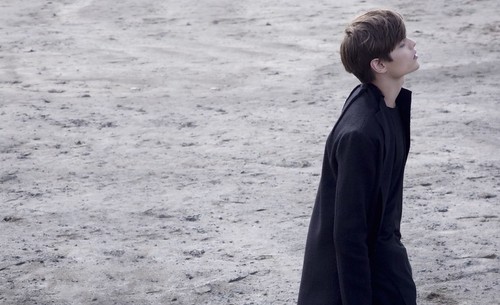
Just before the festive break our inbox was treated to a look book that instantly captured our attention and captivated our imagination. Song for the Mute's Milieu left us reaching out at our computer screen in the hope of touching the tactile rich collection. This three season old, Australian label evolved from a desire to innovate menswear and construct a new twenty first century silhouette with extraordinary fabrics. In Milieu the label has undoubtedly achieved that desire. Fabric is at the core of Song for the Mute’s design DNA and acts as the initial inspiration for this collection. The different tactile sensations provided from the fabrics provoke the design reactions for each piece. Here the pair constructed unique blends of wool and experimented with the cut and drape of pieces. There is an intriguing interplay between the masculine and the feminine at all times. The design duo behind the label, Melvin Tanaya and Lyna Ty, are well regarded designers in their own rights and here their talents have melded to create something truly special and covetable.

Earlier this week, Dapper Kid beat us to the punch and wrote an excellent piece on the collection but we were keen to learn more about the design duo behind the label and decided to conduct an interview across the ocean. Here we talk to Melvin Tanaya about the synergy of the brand, hear of the importance of fabric to each collection and reveal his hopes for the future...

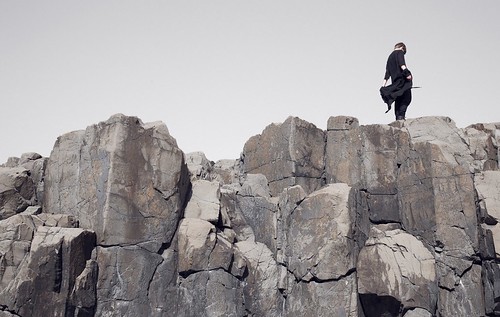

SS: What were your inspirations, your dreams and the driving catalyst behind launching your label?
Melvin Tanaya: It all started as a side project. During my studies I've always wanted to do something for myself and I had this rough concept for a clothing label. Initially I envisioned it to be a graphic t-shirt label but I wanted to use an original pattern to create the tees. Lyna was in Florence at the time finishing her masters degree, I waited until she came back and I've told her what I had in mind for the label in the hope that she would design the pattern for me but instead, she fell in love with the concept and decided to get on board.

We designed the entire first collection 'INK' for A/W2010 without having the name for the label. We knew what we wanted the label to be about but we had trouble finding the right name to represent it. The core idea of the label has always been about self-empowerment. There are a lot of people, who through peer pressure, past difficulties or just unfairly high expectations from those around them, are pushed to do things they dislike. Some don’t have a choice at all. We want our garments to be a catalyst for them. Song for the Mute originated from our desire to create something that could communicate to a customer more deeply and represent something meaningful.
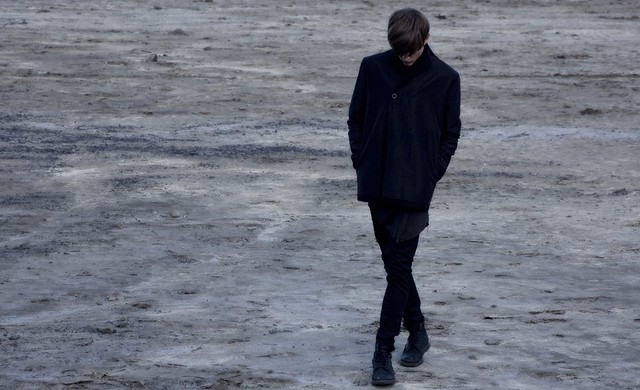

SS: What does Song for the Mute mean to you?
Melvin Tanaya: It means everything to us. We put our all into this label. Because we are an extremely small team - we work seven days a week and around the clock. We are so deeply connected to the work itself, that we take even the smallest things very personally and very seriously. All of these emotions become infused in our work.

Lyna and I might have different interpretations when it comes to the label, but there is always a huge synergy between us when it comes to designing our collections. I think this is one of the major reasons why we decided to start this project together – we both strongly believe in the core concept behind this label – the fact that people can come to their own conclusions, see their own stories or be moved for their own reasons. It’s personal, yet universal at the same time.


SS: The label is a unique marriage of imagination and creativity between the two of you? An intriguing interplay between the masculine and the feminine. How did this exciting coming together evolve in to the label we see today?
Melvin Tanaya: Lyna was originally a womenswear designer who specialises in costume design and couture. However, when Lyna and I began working on the label in 2008, we started with me as a template, creating pieces that resembled how I felt, how I wanted to look and what I wanted to wear. Since then, Lyna has been intrigued by the challenge and the constrictions that come with designing menswear. She thrives on that challenge, it allows her the freedom to experiment and push new ideas, and to keep collections fresh, impulsive, and intelligent.

Since then, we have developed the collections as co-creative directors while also taking part in different stages of the design process. Lyna is the Design Director and spends most of her time working on the collection. She develops all the designs, pattern-make all the pieces and then creates toiles/samples. I'm the Art Director and I take care of the positioning, branding, visual communication and graphic design, as well as the business side of things. We both then oversee the production stages together.
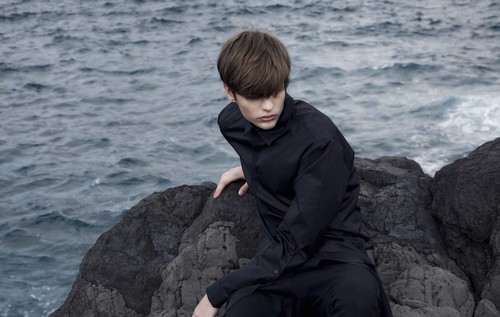

SS: What were the first and last items that you recall designing?
Melvin Tanaya: The very first item we ever designed as a team was a pair of pants called the 'Grandpa Pant'. It literally took us six months to get the fit the way we wanted it. Up until this day I still wear the very first sample that Lyna made with her home machine and they still serve as my favourite everyday-go-to pants. We're actually bringing this style back for FW11 for the Northern Hemisphere in a black-coated-black Japanese denim sourced directly from a mill in Okayama.

In regards to the last item we designed - this is a little hard to pin point. When we received the news that Showroom ROMEO in Paris is taking us on board for FW11, in order to meet the requirements, we had to extend the range to eight five pieces (double the original collection). We have been working closely with AWI (Australian Wool Innovation) along with some key suppliers that we have acquired during our trip to Premiere Vision last September to create our '2nd' winter range made specifically for the international market.


SS: Fabric and concept are obviously integral to each collection. For AW11, you have constructed garments with unique blends of Australian wool. Could you talk us through your design process and how you two have work together to create Milieu?
Melvin Tanaya: The design process begins with fabric selection. It is always our first step and Lyna and I stay in very close contact with our fabric suppliers. Inspiration for any new collection almost always comes from the fabrics sourced.

Lyna draws her designs with the cloth already in mind. That’s essential if we want to give our customers the highest quality possible; we continually search for fabrics that are special, fabrics that talk to us in a certain way. Lyna then tries to find the best way to use this fabric. We have to think about how the fabric will react to the design, the construction, and particularly the comfort. Ultimately, the different tactile sensations from the fabrics draw our design reactions.

As always, there is a major focus on all natural fabrics like silk, linen and modal. However, this FW11 season marks our first serious foray into constructing with unique blends of wool. The vast majority of our AW11 pieces are made from specialized wool. The nature of the products are not like any other fabrics we have worked with. There are so many different types of wool and we can alter their appearance while maintaining their essential characteristics. These garments don't need to be pressed, they all have a natural fall or drape on the body and it is truly beautiful.
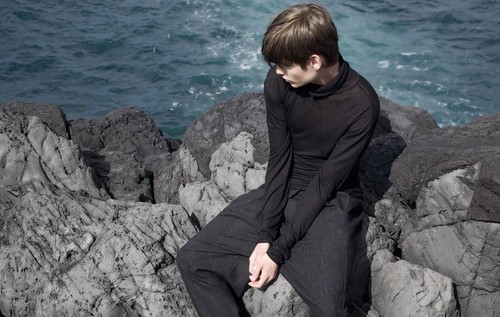

SS: How would you describe the collection in your own words?
Melvin Tanaya: Modern proportions, continuous re-interpretation of traditional fabrics as well as constant research for perfection and an exhaustive attention to detail - and above all, the process of merging pure construction and new shapes to heightened the natural qualities of the fabric within the collection.
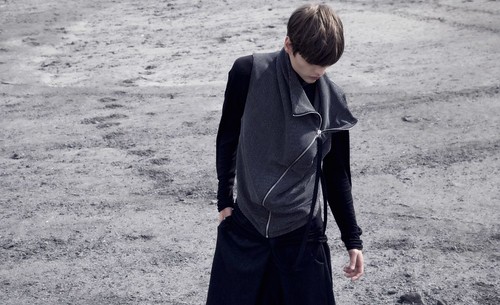

SS: I recently came across a quote from Yohji Yamamoto and I was reminded of it as I looked through the look book. "I know. It's just a fabric. But it speaks to us like a world. If it were a desert, and you a traveler, you would talk about its winds, its stars, its sun. You probably will". For you, what do your fabrics communicate?
Melvin Tanaya: There are certain fabrics that evoke the deepest emotions out of us. I can remember vividly the first time Lyna found the fabric that influenced/stemmed the basis for the whole FW11 collection. I remembered touching the beautiful, soft virgin wool/mohair fabric against my skin and seeing Lyna's eyes tearing up. Fabrics are able to evoke emotions and personal experiences that we never thought about before.

At the core of Song for the Mute’s design DNA is fabric, which acts as the initial inspiration for a collection.

SS: Why have you dedicated the collection to your grandmothers?
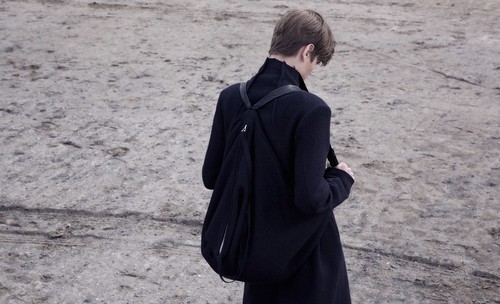
Melvin Tanaya: The soft virgin wool/mohair fabric I speak of in the previous question reminded Lyna of her late grandmother who was the only one in her family who supported and encouraged her to continue to pursue her passion in designing. Up to this day, her family still disapproves to the idea of this label. In the end - we used that virgin wool/mohair fabric to create a piece called 'Wo-ma Cardigan' which is an exact replicate of Lyna's grandmother's cardigan.

'Milieu' which means the 'middle' or the 'core' is Lyna's attempt to communicate her voice and feelings. How she feels, her mood and what she is experiencing and/or experienced, all adds significantly to the development of our concepts. To be able to portray these emotions through the form of clothing, it requires her to develop new shapes, develop new styles and develop new ways of making garments.

The 'grandmothers' theme is not supposed to be taken too literally - most of the FW11 outerwear pieces take the form of a 'cocoon' or an 'egg-shaped' silhouette. Somewhat representing that feeling of losing someone close to you.


SS: This season is something of a landmark for the label as you will be presenting the collection in Pairs later this month. What can you tell us about the presentation?
Melvin Tanaya: We are one of the thirteen labels that will be represented by the highly respected SHOWROOM ROMEO located in 18 Rue Ferdinand duval 75004, Paris. Most of the pieces from the '2nd' winter range will be exclusive for the Northern Hemisphere market and the presentation will feature completely new designs and fabrics that were not included in the official campaign look book.

SS: Finally, congratulations on being named a finalist for the LMFF designer award (top Australian Fashion Design award) 2011. 2011 looks to be a huge year for you both! How would you like to see the label develop in the coming seasons and beyond?
Melvin Tanaya: Thank you! We are so honoured to be in the company of so many big names.

In regards to the coming seasons - Lyna originated as a womenswear and costume designer so developing a unisex/womenswear collection is something that is definitely on the cards. However, for now we would like to establish ourselves as a menswear focused label.

With Spring/Summer 2011-12 collection on the horizon, we are excited to showcase the fabrics we have acquired during our Paris trip just a few months ago. We are hoping to present an individual show at Rosemount Australian Fashion Week in May 2011 in Sydney. Hopefully we can reach out to people who love design as much as we do, offering them and any potential customer quality materials, top notch construction and unique design.


AW11 is something of a landmark season for Song for the Mute and we will be keeping a close eye on the labels development. Here's to their continued success.
Sunday, October 31, 2010

Soar for Autumn

Tim Soar for AW10.

Now, I rarely wear an outfit of pieces from one designer but I had to make an exception after falling head over heels for Tim Soar's AW10 collection back in February. After a successful number of seasons of no-holds-barred modernism Soar opted to look back in order to look forward with his 'Greatest Hits' collection. Throughout, Soar manages to eloquently condense the last one hundred and fifty years of menswear, picking out key pieces and exploring the shifts in the social constructs of masculinity as he goes. Soar developed a mood board that ran chronologically from mid-victorian times through to the late 70s. It then became easy to pick out themes to explore. Some of the themes were detail focused, some were all about fabric others were about cut and construction. The real focus is all about making each piece desirable in its own right.

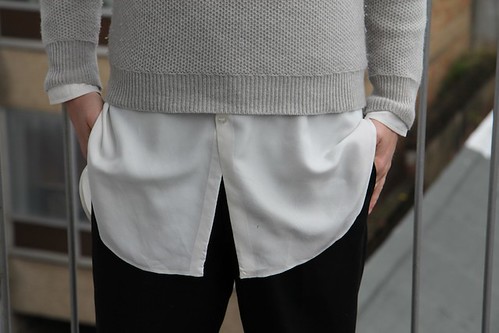
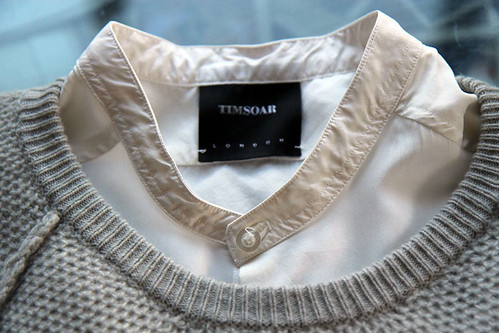
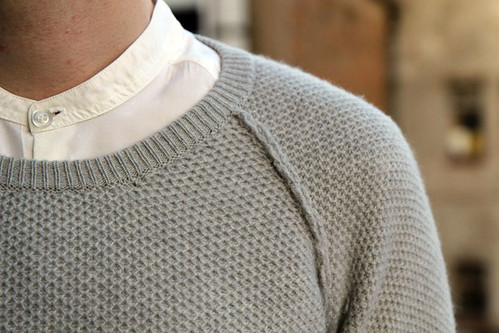
A closer look at the cashmere mix waffle knit and the silk shirt.

For his 'Greatest Hits', Soar wanted to produce a collection that was warm and familiar, one that would have many overlapping memories and echoes from the past. The result is a collection fit for any modern day gentleman. Timeless elegance. When we unpicked the seams of his the collection back in March, I had to physically restrain myself from purchasing the entire line but succumbed to ordering a trio of key piece; the cashmere mix scooped neck waffle knit, long silk shirt and a pair of black trousers. Having enjoyed and experimented with these items for just over a month, I thought that it was about time that I shared them with you...

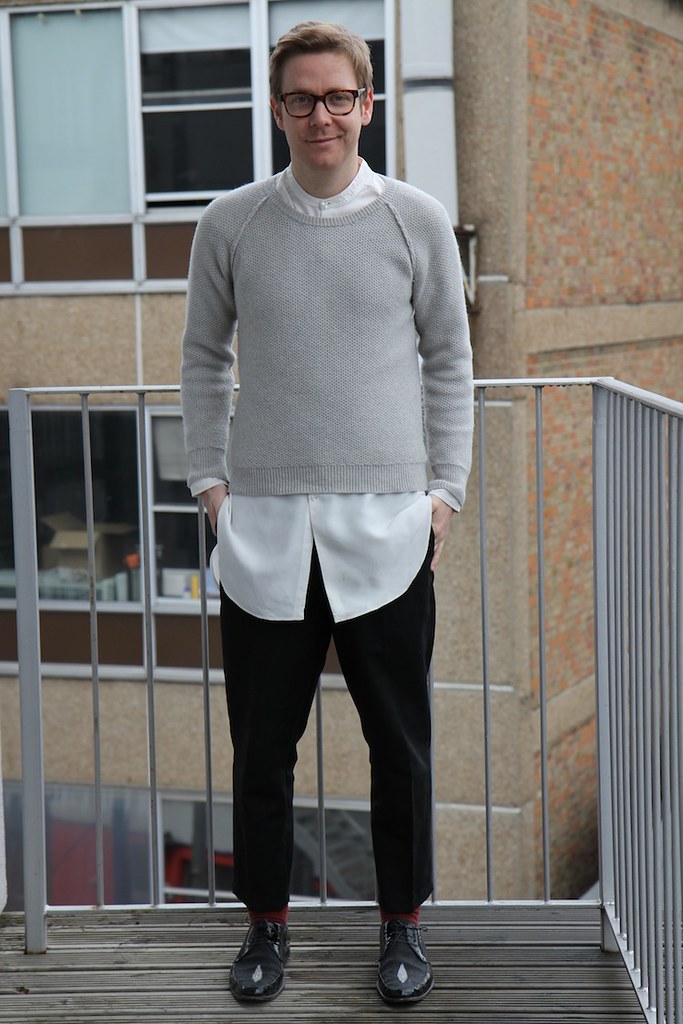
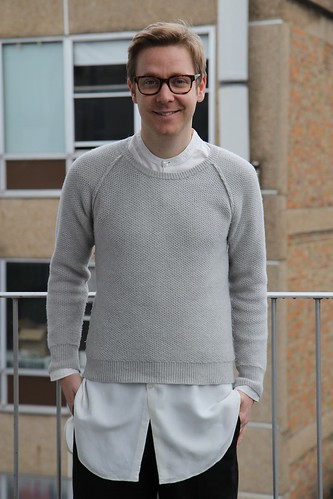
The Tim Soar outfit. Silk shirt, waffle knit and trousers all by Tim Soar
Socks from Uniqlo and shoes by Mr. Hare.

The length and fluidity of the silk dress shirt has to take centre stage whenever it is worn. Of course, it can be a little too much on its own but the fluidity of the piece works so well when worn the super soft waffle knit. I love the playfulness of this combination and decided to accentuate it by cuffing my trousers a little higher.

Silk shirt, waffle knit and trousers all by Tim Soar.

For me, the key piece of the entire collection was the long silk shirt and I was fortunate enough to hear how this piece embodies the aesthetic of the collection from the designer himself. About a month into the design process Soar looked through his own clothing archive and pulled out two exquisite hand made 70s silk dress shirts that had been kicking around for some time. They where very long and fluid, but quite precise at the same time. Upon this discovery the designer was able to see this connection between the Victorian/Edwardian aesthetic and classy Parisian feeling mid-70s menswear. As soon as he made that connection, it all fell into place. Until now, I had nothing like this in my wardrobe and  will no doubt have great fun experimenting with the fluidity of the item.

Here's to celebrating Soar's Greatest Hits.

Monday, October 11, 2010

Experiencing Reiss Personal Tailoring


Can you remember your first real suit? I can. I arrived in the city, shaggy haired, unskilled, full of hope but in full realisation that the task of finding employment was essential to survival. Up until then I had owned one Topman suit which had been worn to a variety of dull family extravaganza and the odd formal social function. Now, if this suit had a prime, it had certainly passed long ago. What kind of employer would trust a young man in such sartorial disarray? I needed to take well polished brogue step up on the tailoring food chain. My first executive decision to join the rat race involved a jaunt to Reiss to update my largely high street wardrobe with a premium high street suit. I opted for a simple two button black suit. I can distinctly remember feeling very special indeed when my purchase was whisked away from my uneasy grasp so that alterations could be made. The very idea of alterations was alien to me. Oh how naive I was back then. Fast forward a few years and despite a reduced need for a formal uniform I have found myself back at Reiss. Invited to take another step up on the sartorial ladder to sample their recently launched Personal Tailoring service.

The Reiss Personal Tailoring area within the flagship store.

Long time readers will know how often I have dreamed of entering the world of bespoke and made to measure suiting. The thought of having a suit made to my own personal specification and desire has appealed to me for many years. Thanks to a break to Hong Kong I entered in to this fabulously well fitted world last November. Having been warned that the experience would lead to an addiction I managed to avoid the lure, mainly through the fear of bankruptcy. Almost twelves months on and Reiss gave me the opportunity to step back in to this world to road test their latest offering.

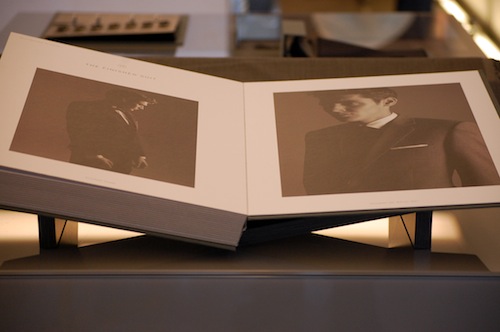
The seventeen process beautifully presented in store.

The Reiss Personal Tailoring experience brings a much needed luxurious approach to formal menswear and has the potential to change the concept of tailoring on the high street. The comprehensive, seventeen stage made to measure service outfits the discerning, modern gentleman. Costing from £550, only £100 more than its most expensive off-the-peg suit this would be a sound investment and takes between four to six weeks from the first consultation to finished suit.

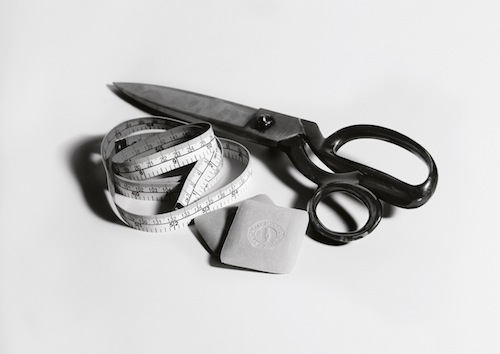
The tailor's essentials

Unless you are Antonio Bracciani (refer to issue No. 9 of Fantastic Man) an off the peg suit will rarely fit. In all likelihood, it will not fit specifically because the brand is designing for a type of man that is different from you. I frequently have issues with sleeve length and pitch while trousers are an ever present thorn in my suiting paw. The thing is most of us don't have ready to wear bodies. As you should all know, a made-to-measure is cut from an existing 'block' which is adjusted to a client's unique specification. Although Reiss are not naming names, the block has apparently been created specifically for them by a prominent Savile Row pattern cutter.

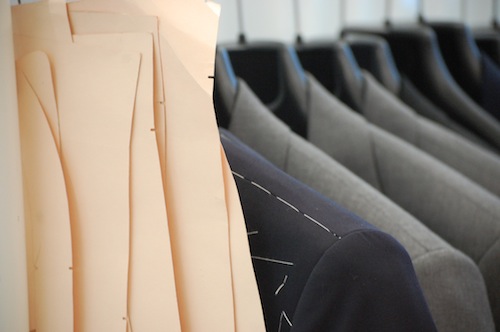
A glimpse at Reiss' block pattern.

Each of the seven stores in Britain that offer the service have personal tailoring specialists to guide you through the process. To ease matters further, my sartorial guide was Ben Leaver, Head of Personal Shopping. Before joining Reiss just over twelve months ago, Leaver worked at Kilgour. He certainly knows a thing or two about suits and was the perfect companion to walk me through the process. The real beauty of a well measured, well made suit is that it will hide any flaws and accentuate the positives. Not only will you look slimmer, taller and more pulled together, but you will move much more freely and feel totally at ease. You should feel as relaxed in it as you would in your favourite pair of jeans. To reach this level of ease, the first stage requires the tape measure. Eighteen measurements are taken with a display of consumate ease. After the measurements were recorded the real fun began as Leaver began to sketch out our shared vision of what the suit could and ultimately would be. The level of choice and degree of customisation is almost overwhelming but Leaver talked me through everything.

A selection of fabric options

To begin with there are more than forty fabric options in combinations of wool and mohair and a variety of patterns. I opted for a mohair blend in a stunning midnight navy hue. Following this decision I had the choice of three jacket styles; one button, two button and tuxedo. Then decisions had to be made on the lapel, pockets, cuff buttons, vents, trouser style, waist details, trousers bottoms, lining, undercollar melton, button holes. After succinctly describing how I wanted the suit to be and how I would wear it, Leaver was soon in perfect pitch with my way aesthetic. I left the first consultation hugely excited and in full confidence that the suit would match my high expectations.

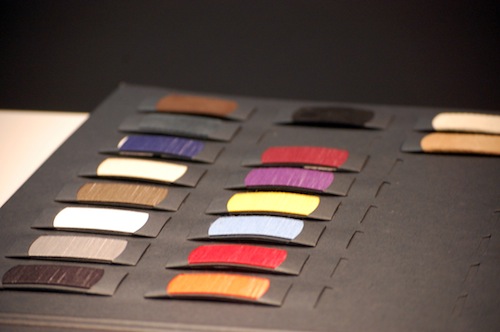
Thread choices...

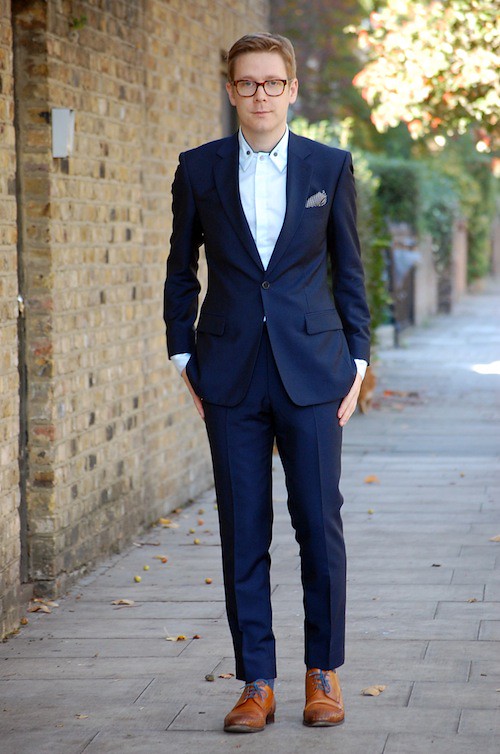
Four weeks later and I was invited back for my first fitting. After reading Simon Crompton's bespoke suit fitting experiences I recalled that one of the most important things to discern in the sleeve at this stage is its correct pitch. By this I mean how it hangs in relation to the body. If there is more material in the back of the sleeve, it hangs forward, more in the front and it will hang further back. Unlike Crompton it seems that my arm hangs a little forward. Leaver soon made the required adjustments by inserting a few pins where necessary. The odd little tweak on the length and fit were the only required amends for the jacket and the trousers only needed the smallest of adjustments. A week later and the finished suit was ready and this weekend saw me wear the suit for the very first time. Below are a few snapshots of my made to measure suit worn on a seemingly made to measure Sunday afternoon in Autumn... 

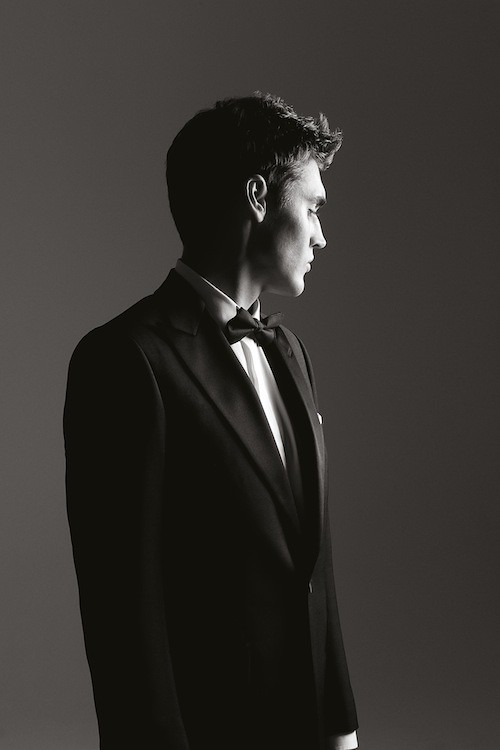
In spite of my terrible posture, the suit manages to accentuate my good points and hide the bad. Worn here with shirt by Omar Kashoura, handkerchief by Drakes, and Pukk shot brogues by Joe Casely-Hayford for John Lewis.

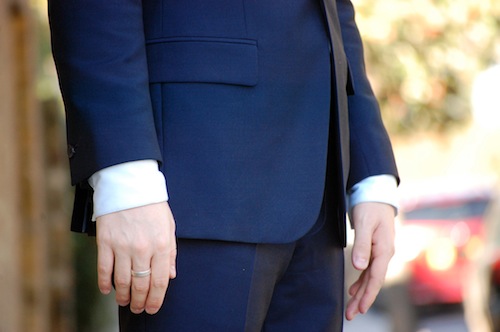
I am particularly pleased with the sleeve length. I might be showing off more cuff than most but after suffering from years of oversized sleeve lengths I positively thrive on revealing that little extra.

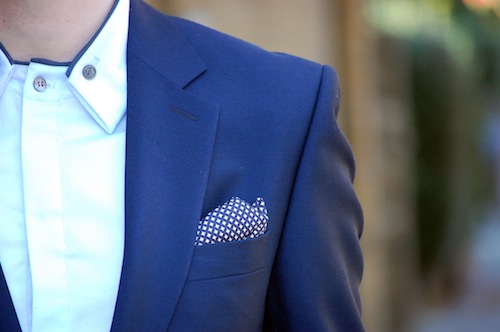
A closer look...Worn here with shirt by Omar Kashoura and handkerchief by Drakes.

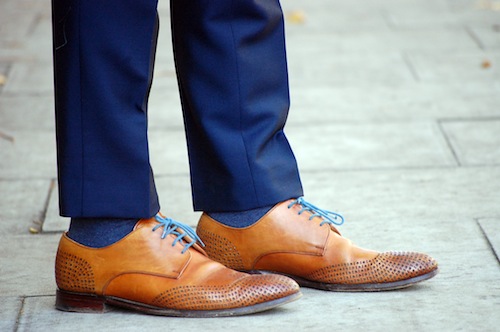
My new favourite trousers. Finally a pair that fit! As I wanted this suit to be my ideal Sunday Best I opted to go a little higher in the leg and reveal a little more sock and shoe than I normally would. After investing so heavily in my shoe options in recent months it is only right that I wear trousers which show them off.

I take great pleasure in declaring that the finished suit is as close to perfection as I can comprehend. Whilst there is nothing that I would change, there is plenty for me to wax lyrical over. I was hugely impressed by the entire experience. A world away from my previous experiences of tailoring on the high street. As David Nicholls wrote in his piece over on the Telegraph, 'The personal tailoring range is Reiss's stab at 'affordable luxury', with the aim of enticing the more aspirant of its existing clientele as well as the recession-hit banker looking for an alternative to Savile Row.' I am quite certain that the uncompromising level of quality and service that Reiss are offering will help transform how most men buy their suits on the high street.

Friday, August 6, 2010

Forgotten Fit


Last month I encountered the designs of Forgotten Future twice in as many hours. Initially by the unveiling of the label over on oki-ni, quickly followed by an encounter with the creative mind behind the label, Richard Dawson at Stitch. This two fold introduction allowed me to fully acquaint myself with the label and by lunchtime I was a fan, a post soon followed. A few weeks later and a package arrived in my mail box containing a pair of high waisted corduroy trousers in burgundy. Dawson was so pleased with my post and the fact that I instantly understood the label that he sent me one of the highlights from his AW10 collection as a huge thank you. I have to confess that gifts always make me feel a little uneasy because they are wholly unnecessary. I only write about the brands that I truly love, there is no agenda. That said, on the odd occasions that I do receive a gift from one of those love brands, the item will be cherished and these cords are no exception...

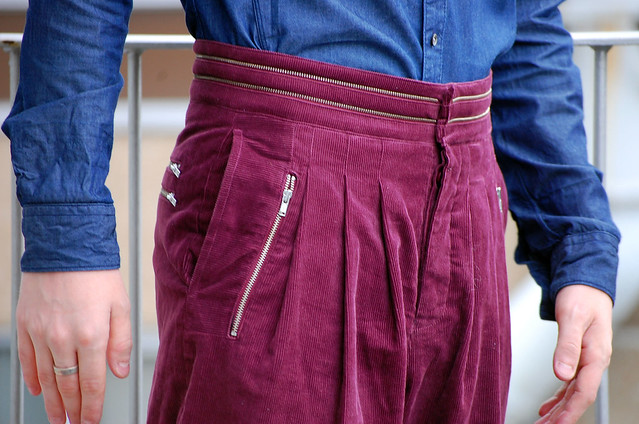
A closer look at the front detailing.

Forgotten Future's sophomore collection was influenced by an eclectic mix of inspirations, from Eton schoolboys to No Wave to Constructivism. These seemingly disparate influences combine wonderfully to create a collection that expresses the kind of sartorial nonchalance which I aspire to demonstrate in my own attire during the cooler months. Along with a high degree of workmanship, silhouette and proportional experimentation are both key to Forgotten Future's aesthetic. These burgundy cords wonderfully encapsulate all that is exciting about the label. Now, these are the first pair of high waisted trousers I have worn for as long as I can remember. Despite admiring pairs from the likes of bstore and Tim Soar in recent seasons I have chose to sit this style out. I doubted whether or not my medium frame could really pull them off with any level of success. I could hide no longer with this beautiful pair hanging in my wardrobe. Below are the results of my first, of undoubtedly many high waisted experiment...

The Forgotten Future cord trousers worn with +J Collection chambray shirt from Uniqlo and Kudu boots by Lodger.

A close up...I love the pleated front detailing and the dominant use of zips.

A close up of the Kudu boots on one of their first outings for a few months.

Thanks to Forgotten Future I am no longer afraid of high waisted trousers. I am most pleased with this first experiment and am looking forward to experimenting with them over the coming months as we welcome in the new season. Roll on autumn...

Monday, March 1, 2010

Unpicking the seams of Menswear Day: Carolyn Massey AW10

Patterns on display at Massey's studio.

As we've said countless times in recent posts, Menswear Day was a huge success as the diversity of menswear design talent on show was both staggering and exciting. However, now that a few days days have past and countless show reports have been penned and posted across the online landscape some would like to draw a line under the day and move on. Not us. As much as we enjoyed the day itself we felt a definite need to learn more about our favourite collections by speaking to the designers themselves and by getting up close and personal to their designs. Catwalk shows are pure theatre and rarely fail to demonstrate the emotions and themes of the collections but most of the time, both of us are left wanting more. With this as our driving motivation, over the coming couple of weeks we will seek out the designs that caught our eye on that hectic, frantic day and take the odd time out with the designers and their creations. Given our well documented sartorial love affair with Carolyn Massey and the fact that she kicked off proceedings at the day itself, it is only fitting that we begin this series of posts with her.

Carolyn Massey's AW10 collection takes its inspiration from a body of military patterns sourced from an anonymous donor. A few leading critics have made a real point of Massey using this archive of pieces but after having a good nosey around her workspace last year it soon became clear that Massey is at her happiest when researching something she has found, so this comes as little surprise to us. By taking elements from pieces she has seen and found while combining them with her vision for menswear she create something new. For this collection the initial inspiration came from the patterns which were toiled and fitted them and edited into a more contemporary story. A darker military aesthetic is explored in union suits, flight suits and smocks released exclusively for Massey's research.

In addition to the delicate detailing and beautiful craftsmanship we have come to expect from the designer, this season sees the label diversify in to printing techniques. Massey developed a wonderfully deconstructed print based on Ray Johnson's postal art and worked with print designer, Sam Cotton to allow the print to repeat and fade and ultimately mirroring the 'lived in' military uniforms and the nostalgic feeling running throughout this collection. You might recall that when Carolyn recently went to Tokyo she kept an image diary for us and that one particular entry confessed her love for the Tokyo morning skyline. For the AW10 collection the muted hues of the Tokyo morning sunrise inspire the colour palette and echo the rose tinted, worn and faded feel to the prints perfectly. At the show itself we were particularly struck by the layered and textured styling of the looks and to achieve this Massey has continued to build and develop her accessories line, knitted hats and scarves were presented along with lavish knitted balaclavas. Also, this season saw her unveil her collaboration with Tabio, the Japanese sock specialist and Style Salvage favourite, which has seen her produce a stunning men's collection.

Armed with a bag full of pastries and our camera we met up with the designer on Sunday morning to both congratulate her on a wonderful show and to learn as much as we could about the collection. Be warned, the result is quite a meaty post but it's definitely worth the read as we talk to the designer about her inspirations, her love of knitwear and the collaboration with Tabio and her hopes for the future...

A rail of utter temptation; a tale of textures and prints.

Style Salvage: The collection is entitled Obsolete Prototype C53 and takes its inspiration from a body of military patterns sourced from an anonymous donor. Were the patterns themselves the starting point?
Carolyn Massey: My work is always a continuing work in progress, it grows and expands with each season but yes, it was this encounter with the donor... well, actually it's an organisation. Due to my passion for reviving things from the past and bringing them in to a more contemporary light they saw that and wanted to help me and hence the donation of the patterns. We started working on them really, really quickly, toiling them up and creating looks we could experiment with. Some were awful and I always think that you have to be extremely careful when you are looking backwards to go forwards. As I've not been going sixty years and don't have an archive of my own, I am drawing on a archive of what I know.

SS: Someone like Kim Jones for example, he has a huge archive to play with at Dunhill, do you look at him with a tint of envy in your eyes?
Carolyn Massey: Exactly, I would love to work for an old house one day and that would be the first thing that I would do. I don't understand how designers can ignore the past; I think you have to contextualise where you are in order to move forward. So, for this collection, we started toiling up very early, fitting them and looking at things and binning a few things and going from there.

One of the prints designed in collaboration with print designer Sam Cotton. Massey had been to see the Ray Johnston exhibition at the Raven Row gallery and was inspired to create postal prints. The faded nature of them is reflected in the silk twill.

SS: Did you find any interesting or novel garment constructions, like you did with the cape from AW09 (which was cut in one piece)?
Carolyn Massey: There were some really great things actually. There was a coat which had a sword pocket in the back- it was all about the positioning of everything, we discovered an ergonomic line of where you would draw your sword from.

SS: There was one coat in particular that both of us loved- the voluminous grey overcoat, was this the one?
Carolyn Massey: Yes, that was the one. For me, elements like the positioning of pockets and how that changes how you stand in a garment fascinate me.

One of the grey overcoats that we both fell head over heels for!

SS: This season sees you experiment and play with the silhouette. A lot of the looks see a teaming of relaxed and loose tops with tighter bottoms...
Carolyn Massey: I think it was more balanced in regard to the collection as a whole but in terms of the styling for the show that was definitely the case. I am quite bored of this straight up and down skinny thing and I think that we are evolving beyond that and are pushing things forward.

SS: There was evolved way of layering and a sense of the clothes being lived in and a richness of subtle textures...
Carolyn Massey: The aged and lived in look is something that I really love. It comes down from my interest of handing down garments from generation to generation. One of the first projects I did as a student was to make a suit out of one of my grandfather's and how the shapes of his body had changed the shape of the jacket. So that has always been fascinating to me.

Exquisite soft, romantic tailoring.

SS: The colour palette was inspired by the muted hues of the Tokyo morning skyline. Looking back at your Tokyo diary for us we can see a great example and can see how it translates quite beautifully in to the realised designs...
Carolyn Massey: Ha, I'm glad you remembered! Whenever I go I am just so jet lagged and this combined with excitement to be there means I am often awake at three in the morning and not able to sleep. I am always inspired by the landscape and I'm up sketching in the early hours. It is just so beautiful. The soft hues also translate to the fabrics used as well.

A quick glance at the ever expanding accessories line

SS: The textures for this season are so interesting. The Lurex jumpsuit is particularly amazing and such a statement piece.
Carolyn Massey: Well a lot of people have said that it would be great for the weekend. For me, when you are showing, you have to have pieces which are interesting and light hearted. You can take it all a bit too seriously, at the end of the day it is fashion and you should be making a statement. The model who wore that, Mathieu, was perfect. If you do those types of pieces you have to ensure that the casting is spot on.

SS: With each season you are building on your accessories line...
Carolyn Massey: Yes, we did a lot more knitwear and as you can see from the table, I love knitwear! I love working on accessories and have grown this side of the line over the last few seasons. I'm always quite obsessed with building up a silhouette around the neck with scarfs and around the head and this is something that we will continue.

Aw10 sees the second collaboration with her comrade and luxury men's jewellery designer, Hannah Martin. Hand crafted new medals and badges, these symbolic objects were given a lustrous patina for new life.

SS: This season sees the unveiling of your collaboration with Tabio. How did the collaboration arise and how happy with you with the results?
Carolyn Massey: It was amazing and I'm really pleased with it all. I started working with them a couple of seasons ago when I was just borrowing items from the shop. During my Tokyo travels I've been able to have meetings with them. They are brilliant because they are obsessed with quality of make and a huge product development section. I've always loved the brand. I proposed this to them and they were really up for it. They've never worked with designer in this way before, they have in house designers in Japan and this is the first time they've collaborated with an outside designer. So I did some designs and set them off and they looked at them and they were like "wow!" I can't wait to see them on sale!

The fruits of Massey's collaboration with Tabio.

SS: Congratulations are in order, we've only just heard the news that you've been awarded Unica's On Stage project! Well done! What can you tell us about the award?
Carolyn Massey: Thank you! I am so pleased and honoured. It was awarded by a panel of people including Vogue Italia's Franca Sozzani, and Pier Luigi Piana, Chairman of Unica. Every season they select ten designers to receive the award which involves a trip to Milan where you will be able to meet with the mills and select your fabrics and work alongside the mills. I feel so honoured because not only is it awarded internationally but across women's and men's as well. It is such a lovely thing to do so I am extremely pleased.

SS: What can we expect from Carolyn Massey over the coming seasons?
Carolyn Massey: I'd really like to build on the success of what I do with Topman and the collaborative projects that I do by working with companies that I love. The collaboration with Topman seems to be going really well. When my sales are high I am always so inspired and it pushes me forward, I am quite driven by sales really because then I know I'm doing the right thing. The bottom line of all of this is sales. It is brilliant to do catwalk shows but the real boost comes from success on the shop floor. At the end of the day we are designing for people out there. I got really excited by one of the looks in the show because it felt as though it had come 360, I tend to be inspired by the people I meet or the guys I see on the street through people watching and one of the looks is genius because I can see it walking down the streets in Hackney. For me, it is a complete validation of what I am doing, it comes from there and will go back there.
--------
For those eager to get their hands on a piece of Carolyn Massey we have news of a Sample Sale Spectacular. We missed out on the last one but were told tales of absolute bargains, so if you are in town over the next coming days, we suggest you swing by and take a look for yourself...

Saturday, February 27, 2010

Aitor's coming come

One of the most exciting additions to menswear day saw the return of Aitor Throup to the already bulging schedule. Despite an already impressive line up, it was difficult not to get excited by the return of this RCA MA graduate. Having spent the last couple of years working on projects for Stone Island, C.P Company and most recently Umbro, fans eager to see Throup's own line have had to wait. The reason we were all excited is because Throup's work is distinct. It communicates a conceptual approach to design while still creating accessible yet interesting garments.

The return of Aitor Throup. His presentation 'Legs' at LFW.

Last month I mentioned that he had presented his work on the lower body, the seemingly simple trouser to be precise, during Paris Fashion Week. Thirty eight pairs of trousers from Throup's design past (from 2004-2009) were sculpted on Gormley-esque, meticulously crafted forms and suspended from the ceiling. On Wednesday, Throup allowed the opportunity to marvel at his designs on home soil once again and of course I jumped at the chance! The presentation demonstrated the designer's distinct ability to unite form with function whilst explicitly demonstrating the designers fascination with structure and process.

Throup’s sculptures cast in fabric

His design work is primarily focused on exploring new structural solutions to clothe the human body. Here, Throup progressed chronologically through his archives, lifting a selection of designs before reinterpreting them with materials and design details appropriate to the season – and in doing so, has created an arena welcoming the expression of pure creativity and functionality. I was fortunate enough to take my seat at a talk at the V&A in August 2008 which saw the designer talk through his design process with Sarah Mower. One sentence uttered by Throup still rings in my ears, ""Artists create problems, designers solve them." You can really see how he is both an artist and designer, solving the problems his mind creates with focus and attention to detail and thirst for processes - his comic book scrawlings transform into reality. The presentation format in the Dairy was ideal the ideal format. It is a series of single items of clothing which have been afforded absolute consideration to form and function, ultimately transcending their origins to become sculptures cast in fabric. Throup does not "like the mentality of showing something for a very limited amount of time to a static audience" because he is obsessed with objects and "there is a narrative built in them and here I can allow the viewer to be the active component rather than the passive component." This presentation and these items of clothing are the truest representation of Throup’s work and are a welcome reminder of why he has such an important future in menswear.

Soon to be released trousers but be warned, these will be extremely limited and demand will be high.

After walking through this presentation and after speaking to the designer himself, it is clear that Throup’s designs exist beyond the standard parameters of fashion. They are meticulously constructed garments existing both within their narrative and without, made with respect for the human body and an astounding understanding of its formation. Throup is admirably creating his own path to follow, one which will not see him create two separate collections according to the demands of the fashion cycle but rather one that will see him tweak and release his constructions as and when he wants to. June 2010 will see the release of the first pieces bearing his name for many years, a trio of extremely limited edition trousers (shown above). I will never tire of analysing this collection or any other of Throup’s designs...now, I just need to start saving so I can purchase a pair.

Tuesday, December 1, 2009

Made to measure (part two)

Ever more ready for made for measure.

Following on seamlessly from yesterday’s introduction, I invite you to continue to accompany me through my virgin journey in to the tailored unknown. Thanks to Susie my experiences inside the tailoring studio have been visually documented. Here I describe my first fitting and in this post it is clear that my talented tailor has been busy. I have the utmost respect for a true tailor. It is something of a dying art, kept alive by the passionate few. People like the chaps at j.a. daye certainly help keep the tailoring ticker in good health.

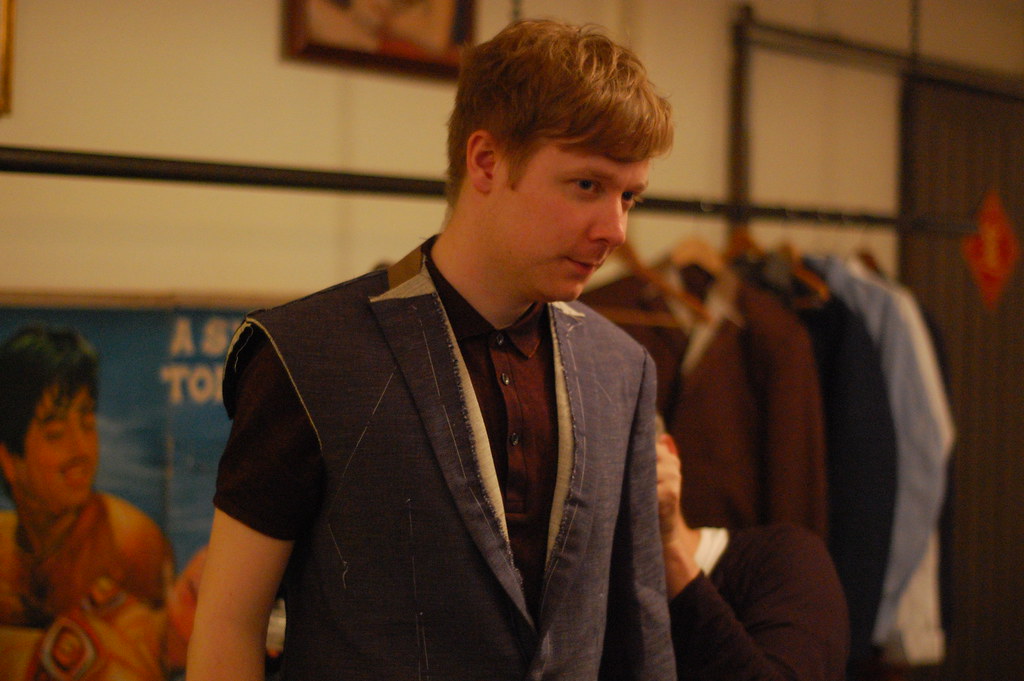
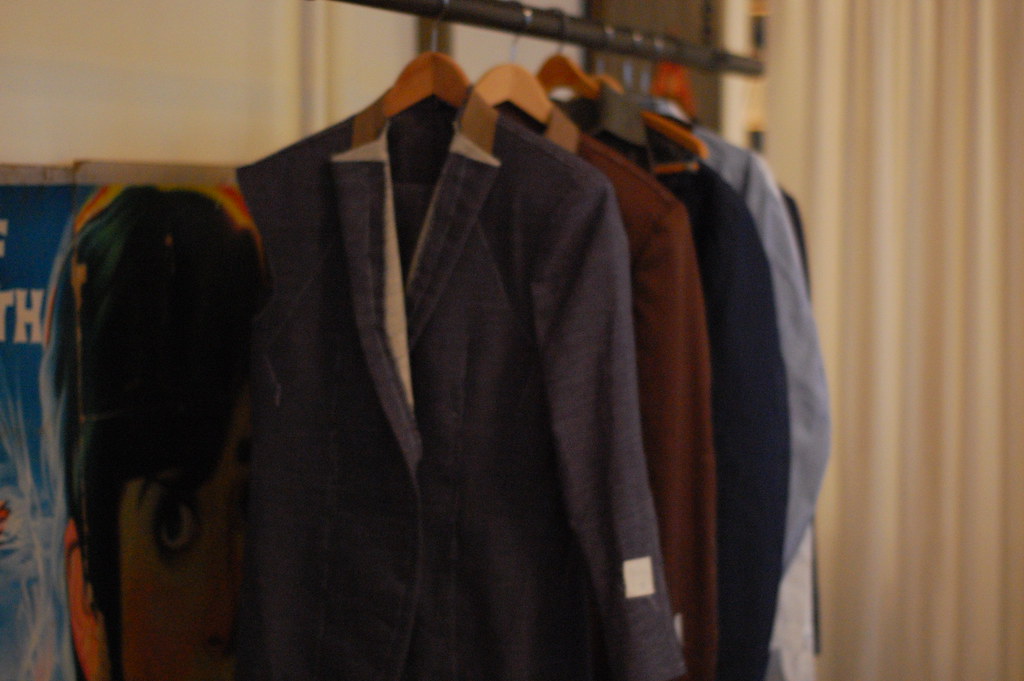
The baste stage. My suit is beginning to take shape...and what an agreeable shape it is to as it proudly stands on the clothes rail.

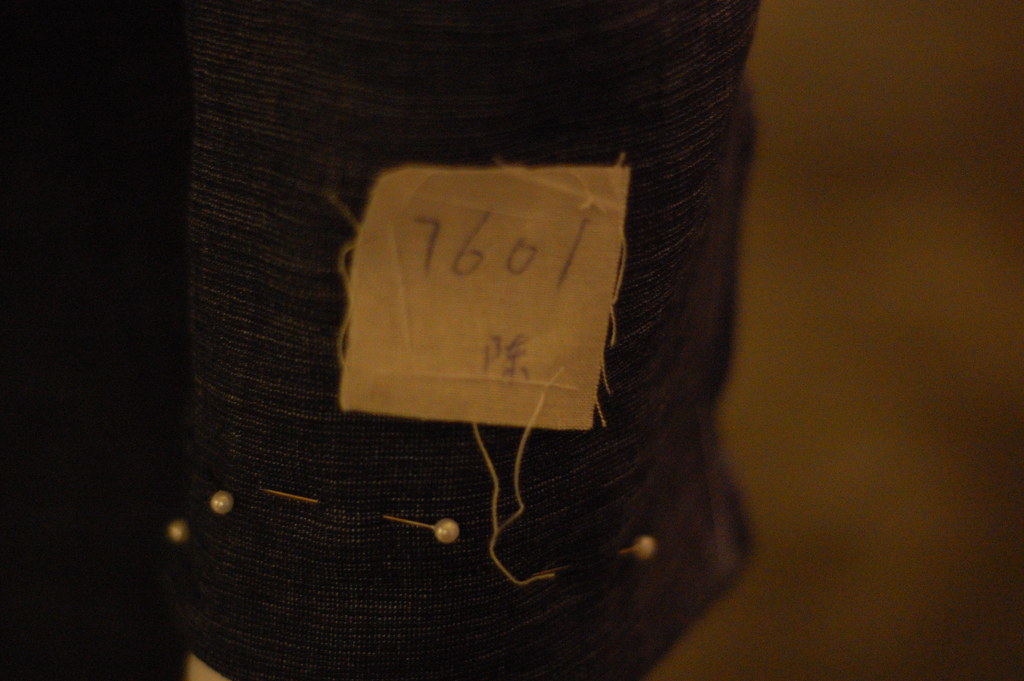
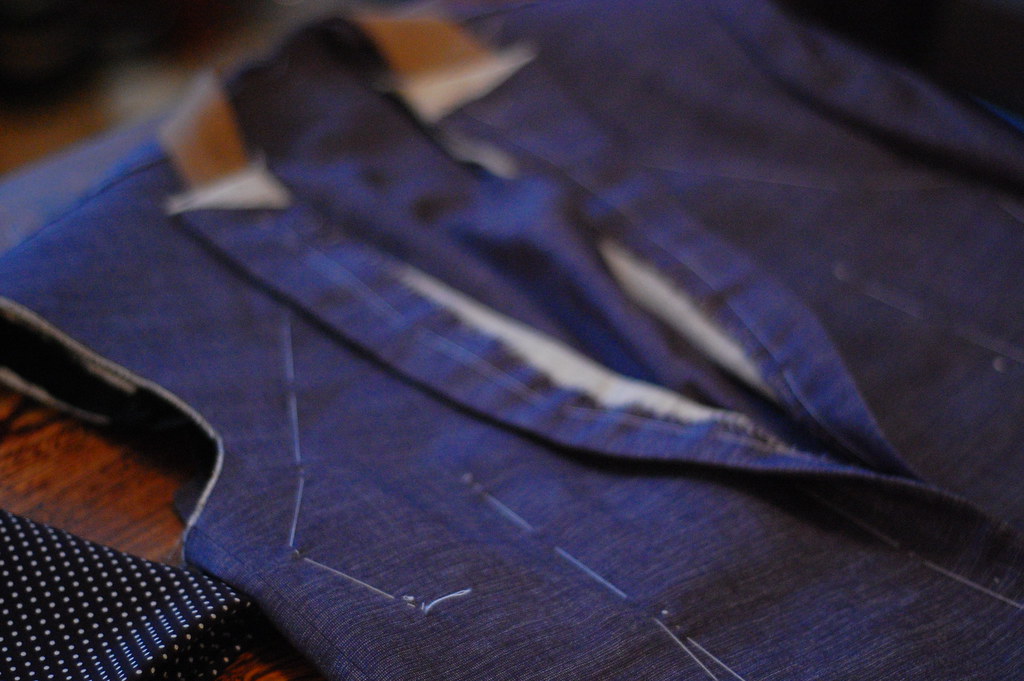
A few days after our initial meeting I returned to the studio for my first fitting. As I entered the room I had no idea what to expect but excitedly looked for the first sight of my baste. A baste is a half-made suit that is not properly finished and only temporarily held together with white baste stitching. This allows it to be easily taken apart and remade. It is is the blueprint for the finished suit and can be radically altered if necessary. Thankfully, no drastic alterations were required, only a few tweaks.

A close up of the baste and my choice of sleeve lining.

From the above shots you might have noticed that only one arm is attached at this stage. The reason for this is that only one arm is needed to judge the length and pitch of the sleeve at this stage (unless the initial measuring established that the client had one arm significantly different to the other...). Why the left? Well, just because it is easier for a right handed tailor to make amends where required.

Finding the right pitch...

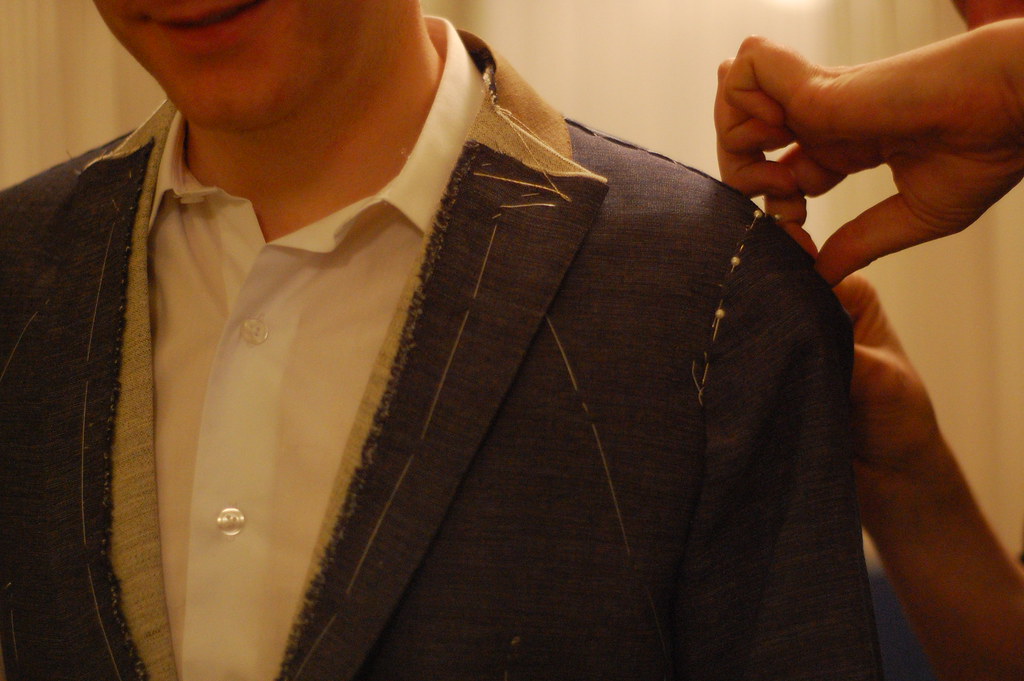
After reading Simon Crompton's recent bespoke suit fitting experiences I recalled that one of the most important things to discern in the sleeve at this stage is its correct pitch. By this I mean how it hangs in relation to the body. If there is more material in the back of the sleeve, it hangs forward, more in the front and it will hang further back. Unlike Simon it seems that my arm hangs a little forward. Ellis soon made the required adjustments by inserting a few pins where necessary.

Opting for a shorter sleeve...this shot captures the appearance of the cross hatch fabric extremely well.

Throughout this whole process I trusted and had full confidence in Ellis. He seemed to know exactly what I wanted. After succinctly describing exactly what I wanted the suit to be and how I would wear it, he was soon in tune with my way aesthetic. After I confessed that I was in the habit of rolling up my suit jacket sleeves during the Summer he suggested cutting them a little shorter to reveal more cuff. Furthermore, the addition of the polka dot sleeve lining would make for a more interesting reveal in the warmer months. As he expertly attacked the baste with pins my confidence and excitement continued to grow.

The re-pinning of the shoulder.

At one stage the eager eyed Ellis was not one hundred percent happy with how the shoulder was lying so re-cut it and re-pinned it to make it much tighter. We were soon both happy with the shoulder and sleeve and moved our attentions to the lapel and collar.

Showing off a little cuff and collar.

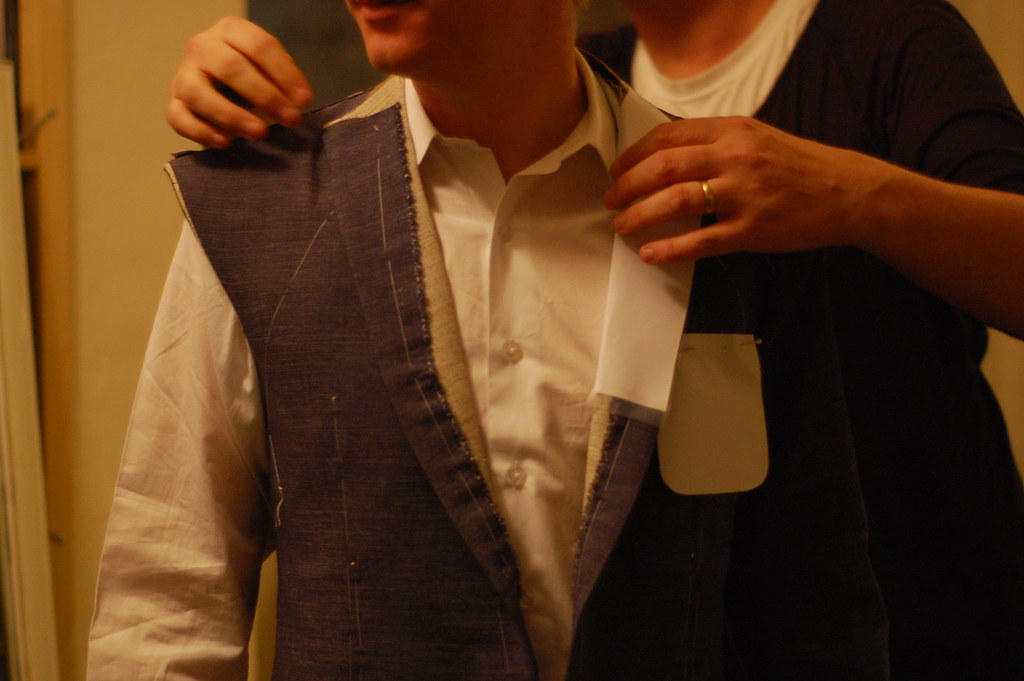
The obsessively observant amongst you might have noticed that I have changed shirts in this series of images. The reason I had to change out of my recently acquired Raf Simons x Fred Perry Polo and in to a white shirt is simply to ensure the suit is correctly fitted. The white shirt enabled Ellis and I to work out exactly how much cuff and collar we wanted the suit jacket to reveal. As we've declared time and time again on the blog, the real beauty of menswear lies in the details. I spent a great deal of time with Ellis ensuring that the details were well thought out, as the finished suit (should) ultimately demonstrates.

Working out the lapel

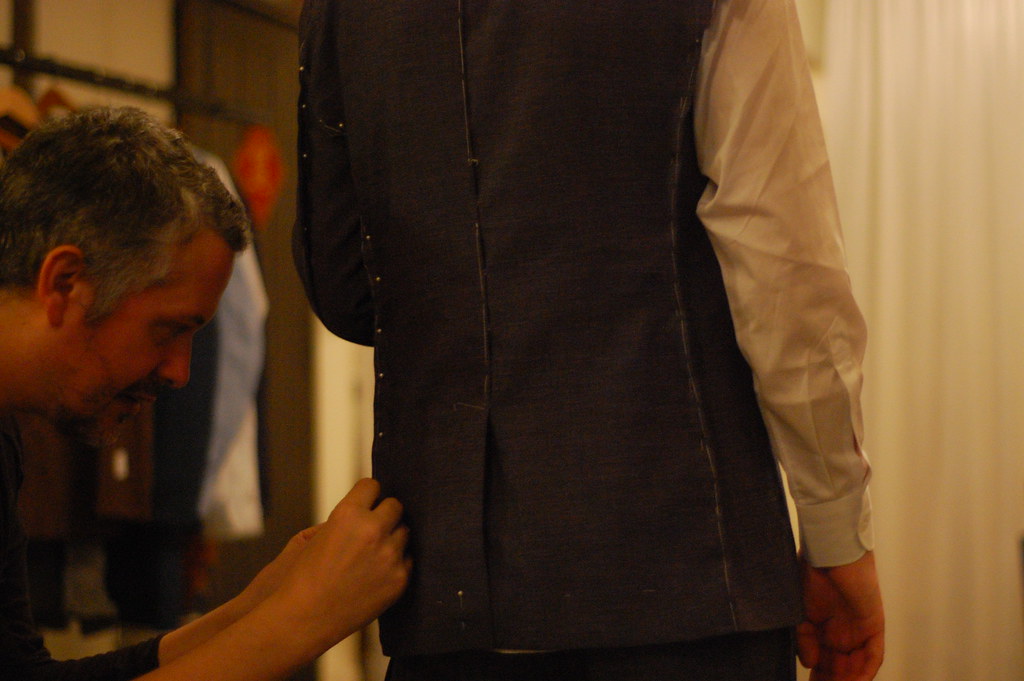
Following the good work on the front of the jacket, Ellis soon turned his attentions to the back of the jacket. I have to confess to possessing a highly curved back...a 'girlie' back if you will. The result is that most of the suit jackets I own do not sit well and there is a collection of cloth below my shoulders. Ellis attacked the cloth with pins once again and after a few insertions, I was soon left with a template which fitted me like a glove.

Hiding the flaws whilst accentuating the positives.

The real beauty of a well measured, well made suit is that it will hide any flaws and accentuate the positives. Rather than look a little odd, this suit jacket was sure to accentuate my silhouette in the most positive manner possible.

The sit down test.

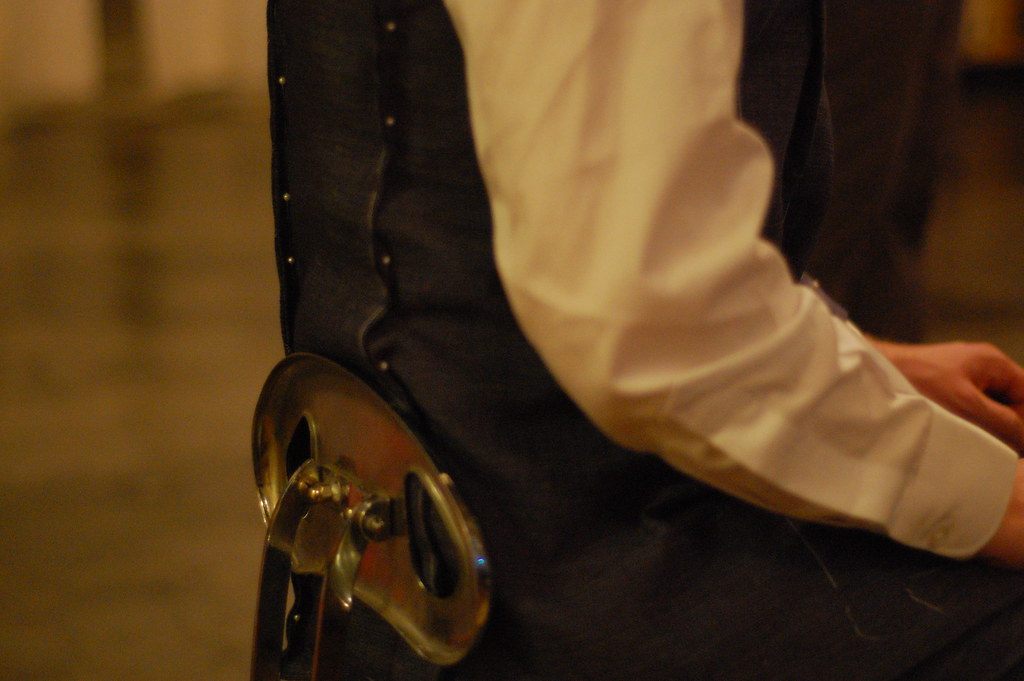
When we were both pleased with the result in the mirror, Ellis asked me to perform a quick seated test to ensure I could sit comfortably in my new tailored second skin. Having passed with flying colours, the suit jacket was put to one side and the focus was on my lower half.

Making light work of the trousers...

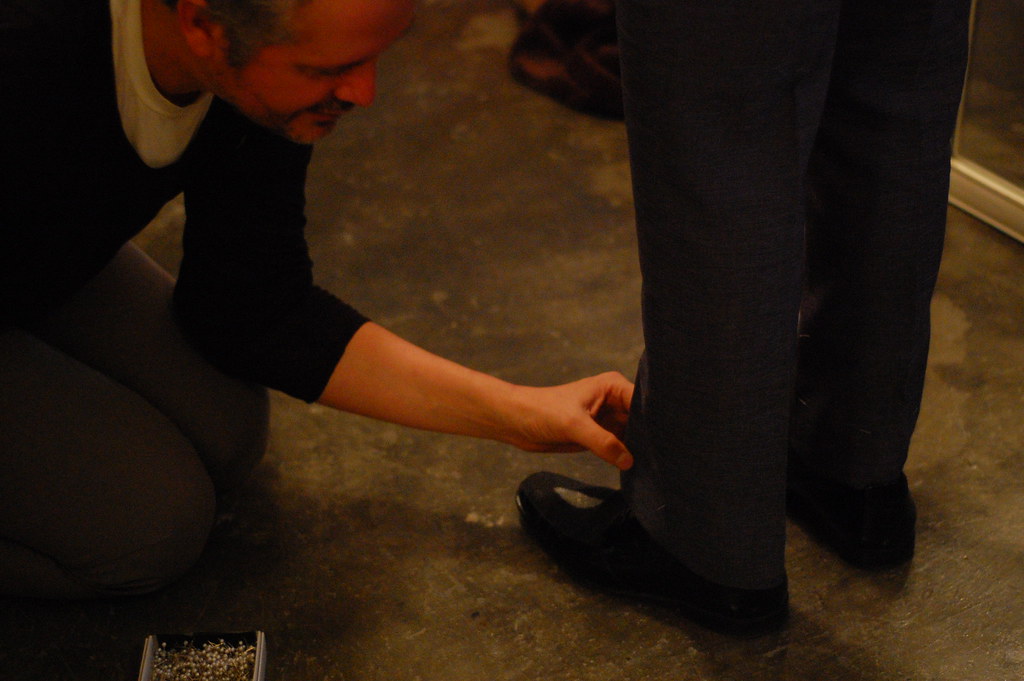
I've always had trouble with trousers. Just ask my family. They will recall with much laughter how they used to buy school trousers which were aimed at children twice my age just so they could fit my expanded waist. These of course were far too long for me and I was something of a squat child and so my Nan had to amend them before I was able to wear them to school. I kid you not, even at a young age my trousers were wider than they were high. I can only laugh about it now. Thankfully, most of the puppy fat has gone but I'm rarely happy with how a pair of trousers fit me off the rack. However, as soon as I tried on this work in progress I knew these would become my new favourite trousers.

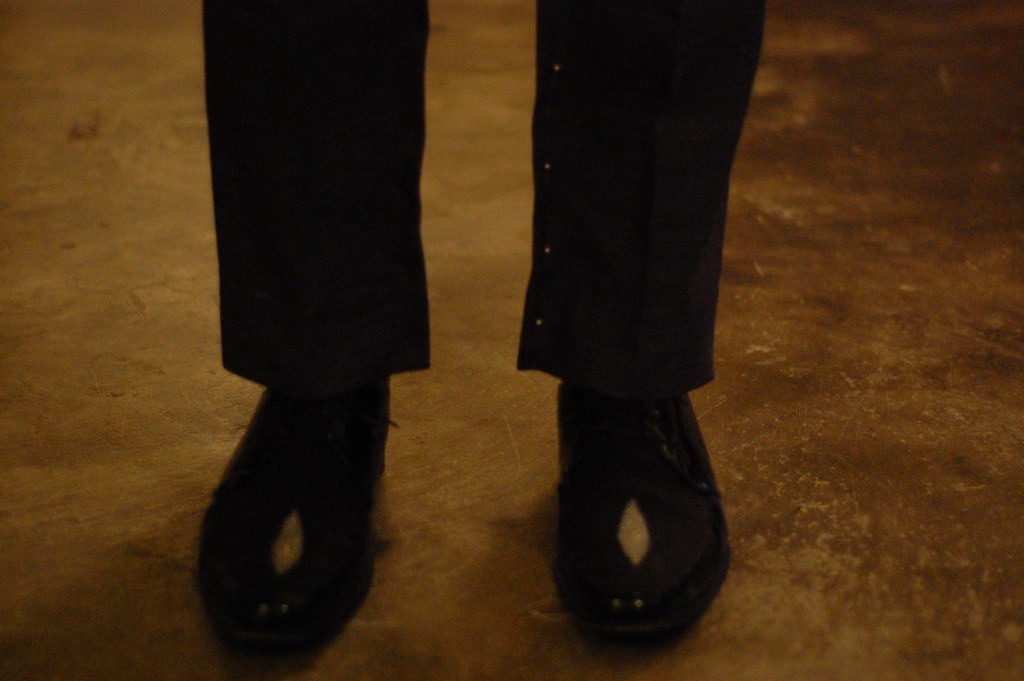
Showing off my Mr. Hare's...it would be rude not to.

The initial cut was near perfect. The odd little tweak on the length and fit were the only required amends. As I wanted this suit to be my ideal relaxed Sunday Best I opted to go a little higher and reveal a little more sock and shoe than I normally would. After investing so heavily in my shoe options in recent months it is only right that I wear trousers which show them off.

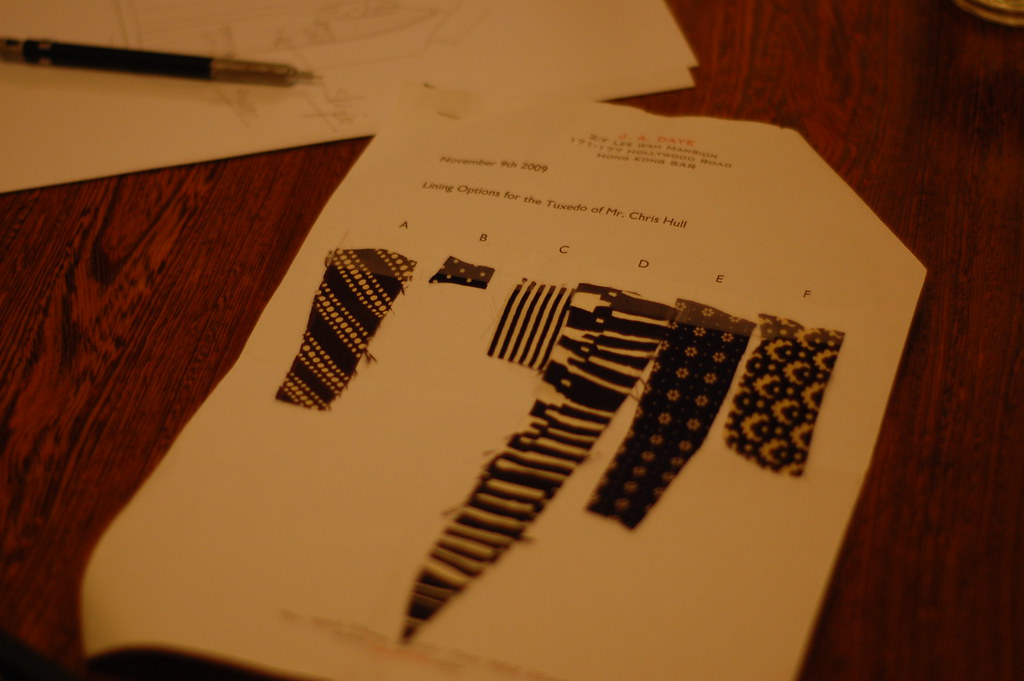
My final lining choices

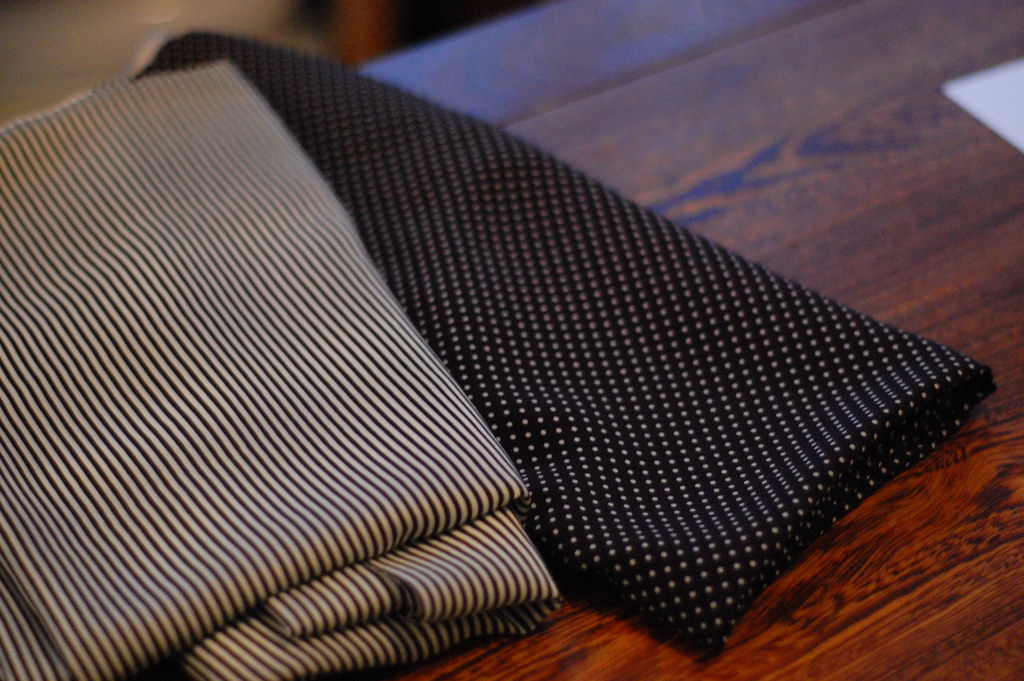
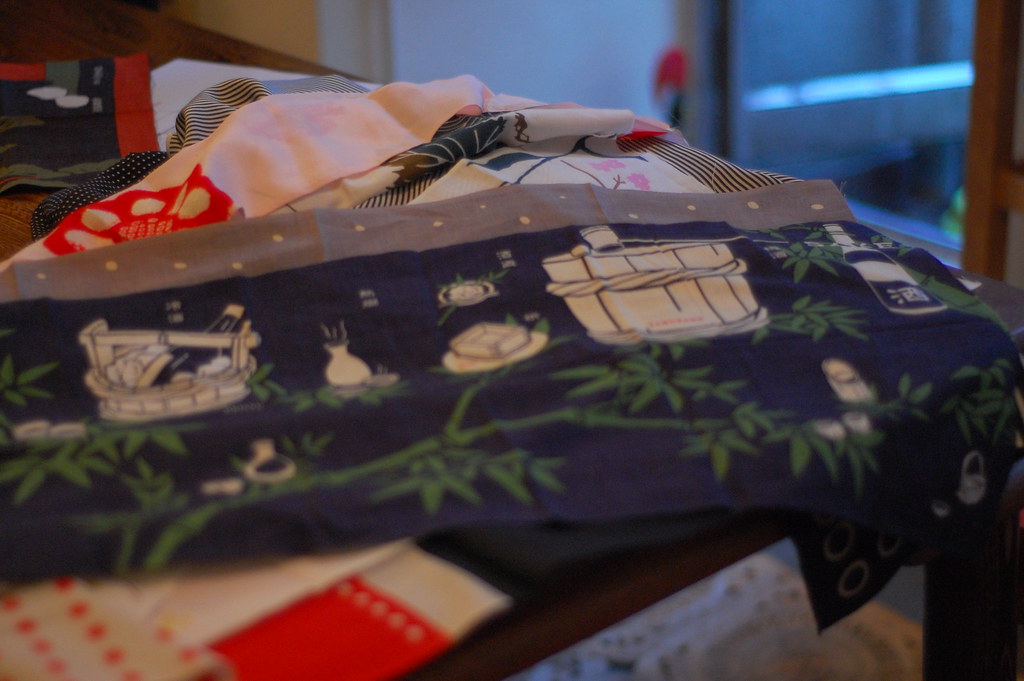
As Ellis made light work of marking out my ideal pair of trousers we put the fast evolving baste to one side. This blueprint would soon be passed on to one of j.a. daye's expert local tailors to make my suit. Before it left the studio there were still a few finishing details to discuss. Most interestingly, for me at least, were the lining options. As mentioned yesterday, I had fallen for the idea of having a polka dot lined sleeve and contrasting striped body but I still had to choose which particular fabrics I wanted. To help me make my choice, Ellis brought out an array of different fabrics that he had collected on various trips to Japan and beyond. The array of options actually made my decision more difficult especially as I was enamoured with the traditional Japanese prints. Sensing my confusion, Ellis put forward the idea of adding a strip of my favourite print to the trim. It was an inspired idea. Decision made, I just had to play the waiting game.

The final sketched vision (below) combined with my re-cut and amended baste would soon make my sartorial dreams a reality. Tune in later this week for the final post on this series which will showcase the end result!

The final sketch...